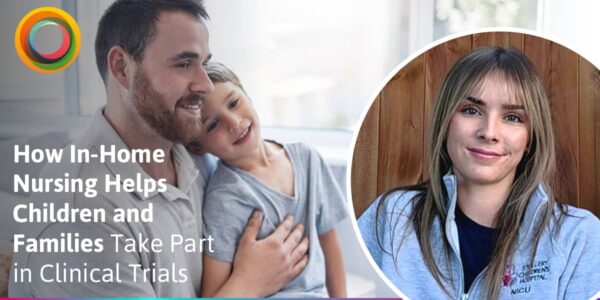

At the heart of patient-centred clinical trials are mobile health nurses who bring care, comfort and clinical expertise directly into patients’ homes.
By delivering procedures with compassion and consistency, mobile health nurses ease the burden on patients and ensure high-quality data collection. Every in-home health visit is a careful balance of precision and empathy, demonstrating how patient-first approaches can make trials more accessible and improve retention.
Meet mdgroup mobile health nurse Rachel
We had an opportunity to speak to Rachel Jiang, a wonderful mdgroup mobile health nurse, about what it’s like to bring clinical trials directly to patients and how her role supports a truly patient-centered approach.
Rachel shares her perspective on the rewards of delivering care to patients’ homes. From preparing complex lab samples to building trust with patients and families, she demonstrates why mobile health nurses are essential to making decentralized trials work – for everyone involved.
How did you know nursing was your calling?
 “When I was five years old, I read a story about Clara Barton – the ‘Angel of the Battlefield.’ That was the moment I knew I wanted to be a nurse. I was captivated by the idea of caring for the brave and the vulnerable and going wherever care was needed most.
As I grew older, that early spark shaped an incredibly diverse nursing journey. I spent several years working in hospital settings, both as a staff nurse and later as a travel nurse in high-acuity environments across the U.S. I also had the privilege of serving in developing world settings, where adaptability, resourcefulness, and cultural humility are essential.
Beyond hospital work, I gained experience in family practice and a variety of specialty clinics, each broadening my understanding of patient needs across many stages of life and health.
I also took a few years off to care for my children – a season that shaped me both personally and professionally. During that time, I continued studying, taking online courses, and keeping up with clinical developments so I could keep growing as a healthcare professional. That period strengthened my empathy, adaptability, and commitment to patient-centered care.
All of these experiences reaffirmed what I felt as a child: I’m called to serve people wherever they are, especially those who need care the most.”
How did your previous roles prepare you for mobile health?
“Until a few years ago, I didn’t even realize mobile health nursing for clinical trials existed. When I discovered it, I was thrilled – it checked every box I had been searching for. It allowed me to use the skills I’d gained from years in hospitals, clinics, and global settings, while also reaching people who might otherwise be excluded from research due to access challenges.
Being able to bring clinical trials directly into patients’ homes felt like the perfect marriage of my passion for service and my desire to support vulnerable populations where they are most comfortable. I love the mission of mdgroup and how every person I’ve interacted with so far completely embodies it- personalized and patient-first all the way. I feel so privileged to be able to join in their work.
Caring for someone in their home is truly an honor. In a clinic or hospital, you’re on the institution’s turf – the environment creates natural boundaries around illness and care. But entering someone’s home means being welcomed not just into their physical space, but into their life.
There is a unique level of vulnerability, trust, and authenticity. That is why I deeply appreciate the emphasis mdgroup places on the patient. Everything is centered on meeting patients’ needs in the most comfortable, life-friendly way possible.”
How do you make patients feel comfortable in their own environment?
“Preparation for a patient visit starts with reviewing the visit plan with my Clinical Manager (I’ve mainly worked with just one this year, and she is fantastic!). We clarify procedures, supplies, timing, and any special considerations. During the education prior to taking on a study, the CMs have been generous in providing their recommendations for the order and timing of the tasks involved in the visit as well!
I coordinate with the patient ahead of time and ensure they feel ready for the visit. Reviewing the education and my travel plan to the home, triple-checking my supplies and paperwork, and packing in a way that makes the visit and procedures flow smoothly are part of the process. I stay organized and try to prepare for any what-ifs.
For example, if a patient has difficult veins, I bring warm packs, butterfly needles, or anything that will make their experience more comfortable. It’s really all about the patient and meeting their needs as effectively as possible – preparation really is the foundation of calm, confident care.
I support the patients’ families and caregivers by including, informing, and reassuring them. I explain each step in plain language, answer questions with patience, and create space for their concerns. When families feel supported, the patient feels safer – and the entire visit becomes a better experience.”
How do you keep patients safe and comfortable during procedures?
 “In my nearly 2 years with mdgroup, I’ve performed a variety of procedures: lab draws, spinning and separating samples, slide preparation, vitals assessment, medication log review, taking medical histories, cardiac monitoring, and administering subcutaneous injections of the IP (investigational product).
When setting up the visit with the patient or caregiver, I also explain the process and ask if they have questions or preferences, so we can set expectations for the visit. Upon arrival, I try to put patients and family at ease with warmth and appreciation of being welcomed into their home, and strive to set the environment so the patient’s part is quick, comfortable, and as painless as possible. The focus is always on the patient! Not only for me, but for every person involved with the care of that patient.
My Clinical Managers have been wonderful – not only do they coordinate all the moving parts (i.e., communication with the site, setting up lab couriers at the right times, etc.), but they are also incredibly supportive and stay accessible throughout visits, ensuring each step of the way meets the study standard – also to help troubleshoot or answer questions. The lab couriers have also been great. One was especially helpful when I was learning the ropes on my first couple of visits!”
Can you share a time you went above and beyond for a patient?
“One meaningful example involved a patient (not one of mine) who needed to travel at the last minute to a state without a mobile health nurse. Because I hold a multistate license, my Clinical Manager reached out to ask if I could travel to meet this need. Within a few days, I arranged childcare, completed my study education, and flew out to conduct the visit.
Weather delays stranded me in Denver on the way home, but the awesome travel team was so supportive and helped me get through the night and on to a flight the next day. Despite the unplanned adventure, it was absolutely worth it. The patient stayed on track with their trial and continued their life plans – exactly what decentralized care is meant to achieve.
It meant the world to the patient to continue the clinical trial without putting their life on hold. For me, it reaffirmed why mobile health matters: to protect autonomy, dignity, and continuity.”
What part of being a mobile health nurse is most rewarding?
“Knowing that my presence removes barriers – transportation, mobility limitations, anxiety, family obligations – is incredibly rewarding. Bringing care to the patient transforms their ability to participate. I feel so honored to be a part of this mdgroup team that is so dedicated to their patients and making these decentralized trials possible!
Sometimes it’s the smallest gestures that make a big difference: scheduling around a caregiver’s needs, making a difficult blood draw easy, or simply offering a calm presence. You can feel the relief when patients realize the visit will be smooth, respectful, and centered on their comfort.”
What advice would you give nurses curious about decentralized trials and mobile health opportunities?
“Decentralized trials are the future of patient-centered research. They provide access to rural communities, lower-income households, and patients who cannot uproot their lives for a study. They increase diversity, potentially strengthen data, and make participation possible for people who were once excluded.
Nurses have really become connectors in decentralized trials. Beyond procedures, we help to translate the science, reduce barriers, bring calm, improve communication, and make studies human-centered. Nurses are increasingly the reassuring face of clinical research.
Mobile health allows you to bring clinical trials into patients’ homes, expanding access in ways that were never possible before. It is so rewarding to see the hope that it can bring for people.”
How do you ensure the patient experience comes first?
“I bridge the gap between patients and research by stepping into patients’ own homes – helping to connect complex research protocols to real-life routine and comfort. I build trust, reduce fear, and help patients and families feel supported every step of the way.
The patient experience is the heart of everything I do. Preparation ensures the visit is smooth; presence ensures it is human. My goal is always to provide excellent care with the least possible disruption to the patient’s daily life.”
At the heart of patient care in decentralized trials
As highlighted in The Participation Equation by Cuttsy+Cuttsy, technology alone can’t offer the reassurance and understanding patients need when taking part in clinical trials. Real, human connection remains essential for both encouraging participation and supporting patients all the way to study completion.
Decentralized trials give patients the freedom to participate on their own terms, helping to remove barriers such as travel, mobility limitations or scheduling challenges. This flexibility directly supports engagement, retention, and a more patient-centred approach to research. At the core of this model are compassionate mobile health nurses, who ensure every patient is treated as an individual, not a number.
mdgroup is dedicated to delivering exceptional, patient-first experiences throughout every step of the clinical trial journey. Our mobile health nurses are central to this mission, bringing clinical expertise and personalized care directly into patients’ homes. As we’ve seen through Rachel’s work, in-home nursing ensures that patients who might otherwise be unable to participate in trials have the opportunity to access potentially life-changing treatments.
 Our nurses go above and beyond to make every visit smooth and safe, helping patients feel valued and cared for throughout their study. Recently, we shared another story from Alessandro, whose determination saw him overcome everything from flat tyres to flooded roads to complete his in-home visits in Florence – read the full story here.
Learn more about mdgroup’s decentralized clinical services and how we can support your trial success here.