
mdgroup live is our new webinar series shining a spotlight on the people and stories behind clinical research. Too often, the human voices behind trials are hidden behind data and paperwork. This series changes that by focusing on the people and experiences that make research truly human. Here you can rewatch the full episode or read the highlights below.
In our first episode, “From Professional to Patient”, Peter DiBiaso joined our Founder and CEO Miriam Dervan, to share his remarkable journey from senior life sciences executive to patient advocate. Following his diagnosis of Early-Onset Parkinson’s Disease, Peter’s perspective on patient-first research shifted in profound ways.
Highlights
[00:00] Introducing Peter DiBiaso[03:45] The first signs of Parkinson’s Disease
[05:01] Receiving a Parkinson’s Diagnosis
[06:40] Sharing the news with family, friends and colleagues
[09:07] Life with Parkinson’s – challenges and unexpected positives
[11:36] Becoming a research patient in clinical trials
[13:37] The unanswered questions and the importance of support
[17:21] Creating patient-centred clinical studies
[19:44] The power of caregivers
[21:56] What would you change about clinical trial perspectives?
[23:55] What newly diagnosed patients should know
[26:38] Closing words
Introducing Peter DiBiaso

Miriam Dervan: Welcome everybody to our first live mdgroup webinar. It’s our webinar series spotlighting the people and stories to make our clinical research truly more human.
My name is Miriam Dervan, I am the Founder and CEO of mdgroup, and for those of you not familiar with mdgroup, mdgroup supports pharma and biotech companies of all sizes to attract, engage and retain patient participation in clinical trials. We have three pillars: reimbursements, patient travel, and in-home health visits.
Peter DiBiaso is a distinguished senior life sciences executive with over 30 years of comprehensive experience. His career is marked by a proven track record of developing and leading global teams in both sponsor organizations and CROs. Early in his career, he was recognized as one of voice’s top 100 for creating effective collaborations that drive efficient business solutions.
More recently, Peter serves on several executive and advisory boards. He is very passionate about championing the patient perspective and support of investigative sites in clinical research. Peter is based in beautiful Paris, which has enabled him to provide valuable international experience to his teams. Welcome, Peter, and thank you so much for being our first guest.
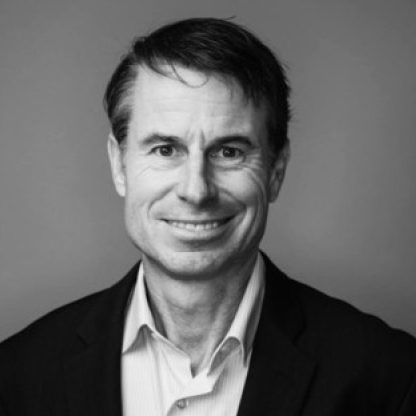 Peter DiBiaso: Thank you so much, and it’s a pleasure. I appreciate the invitation.
Miriam: I’m delighted as well, because just for our listeners, I don’t know Peter’s story either – I’m intrigued by what he’s got to tell us today. Before we delve into your patient journey, tell us a little bit about yourself, where you’re from, and how you ended up in beautiful Paris. Tell us, who is Peter?
Peter: I’ll give you a little bit of the extended elevator pitch, but I’ve lived in New England and in the Boston area, just north of Boston through most of my college years and went to school in North Carolina. I had a chance to work down there and then lived in Washington, D.C. for a while.
But really, my entrance into the sponsor and pharmaceutical industry was when I accepted a first role at Pfizer, where we actually created the first internal patient recruitment organization. So, ironically, that was really my first exposure to patient recruitment, and the role of sites and patients. Pfizer was paying a lot of external people to do that, and they decided to retain those capabilities internally. That was really a great opportunity for me to see the process, see what works, and see many things that didn’t necessarily work. That was a good catalyst for me to focus on that part of my career.
Then subsequent roles were really focused on clinical operations and relationship management. I spent a fair amount of time at both sponsors, so Shire (Takeda now), and then on the CRO side, WCG, Quintiles, and then IQVIA. It’s enabled me to have the perspective of both sides of the coin. I couldn’t be happier to be involved in a role that enables me to apply that experience and obviously led me to the path that I’m on today.
The first signs of Parkinson’s Disease
Miriam: It’s funny where our life takes us, and here you are, as a patient, Peter.
With that said, I know you’ve had Parkinson’s for over 10 years now. Can you tell us when your first symptom appeared, and how you felt that symptom? And tell us a little bit about it from the first time you noted that symptom up through to being actually diagnosed.
Peter: It’s an interesting story, because it was many years before I was actually diagnosed that I had some recurring tightness in my heel and my ankle during running. As most of my friends and everyone knows, I’m an avid runner. I have just enjoyed that all my life, and I’ve done marathons and triathlons – but something was wrong and it was hurting my stride a little bit.
Like many runners, I just worked through it and tried to come through the other side. But it got to the point where it was really limiting my running capabilities. And at about the same time, I started developing just a little bit of a flutter in my hand when I picked it up – my fingers were shaking just a little bit. So, it was some of the early signs, and that led me to a neurologist.
Receiving a Parkinson’s Diagnosis
Miriam: My mum as well had something similar. She didn’t have Parkinson’s, but she actually had symptoms of Parkinson’s, very similar to your own. She had the shaky hand, and she couldn’t walk through doorways and stuff like that. She had the symptoms, so I can recognize what you’re saying there.
When did you actually get diagnosed, and how did you feel about knowing that this is actually a true disease that you have now?
Peter: My first visit was to a neurologist, who then recommended me to one of her colleagues, a movement disorder specialist, which in the care for Parkinson’s, is a subspecialty of neurology.
I met this gentleman in Boston and quickly learned one of my first lessons about the frustrations of Parkinson’s, which is that there’s actually no definitive diagnosis of Parkinson’s. Which is very interesting and a challenge if you’re trying to find out information.
The physicians will say you have so many of the criteria and characteristics, but I persevered and actually went and got a dopamine transporter screening test, which is short for DaTscan. That was actually looking at the waves in the brain and looking at development. The results from that showed signs of what they would classify as early-onset Parkinson’s.
That was really the first hit in the face that this is real. My hope and thinking it was just some bothersome thing in my ankle, that’s not going to happen anymore, so it’s time to go into action.
Sharing the news with family, friends and colleagues
Miriam: At least you got answers, which in one way was a positive thing, but then to hear that you had Parkinson’s must have been very tragic. I can’t even begin to imagine what it must be like as a patient to be on the other end of receiving that news.
How did all your family, friends and workers react when you learned that you had Parkinson’s?
Peter: It came out in dribs and drabs. I was a little hesitant at first until I learned more myself and came to terms with issues, but I think it was the gamut of emotions, and a lot of people are very uncomfortable. You get the “how are you doing?”, which is code word for, “you’re not dead yet, so tell me about your disease”. It’s been a bit of a journey, but I think people are genuinely interested and they want to know more about it.
That was really another catalyst for me to say, there’s a lot of interest in this and I’m facing this – why should I face it alone? I want to get involved with finding a cure and I want to make my personal community part of my caregivers. That’s where I made the decision to stay active and to this day I support the Michael J. Fox Foundation for Parkinson’s Research Patient Advocacy Group as a legislative advocate. I’ve done special research projects and published in several scholarly journals, and it’s really enabled me to invest my time effectively.
Miriam: That’s amazing because I listened to a Michael J. Fox webinar recently, and they’re doing amazing work there. Did you ever meet Michael J. himself?
Peter: On several occasions, yes. I actually ran the New York City Marathon twice for the Michael J. Fox Foundation, and I saw him along the way. He lives closer to the finish line, so I was able to give him a big hug, and he was the help to get me over the line. I’ve been to some other events where he was there, so I’ve been very fortunate.
My daughter belongs to the Young Professionals of New York for Parkinson’s Disease. She’s gotten involved, so again, there’s something for everybody. That also includes me deciding to climb Mount Kilimanjaro. All this was after my diagnosis, so that was an experience that I’ll never forget. It’s all these things that you can feel like you’re doing something for an incurable disease.
Life with Parkinson’s – challenges and unexpected positives
Miriam: It’s amazing how your life changes and where your life takes you when you do get a diagnosis like that.
What were some of the challenges that you faced over the past 10 years? I’m sure some of the challenges would be your movement as well, your physical challenges – talk us through some of the challenges that you have faced over the years.
Peter: I was fortunate that my progression continues to be fairly slow. It’s one of the ones where there’s a positive aspect of Early-Onset Parkinson’s Disease, because when you’re diagnosed early, the symptoms tend to be very much slower in terms of the maturation of those issues, so there’s a slowing of the condition. I didn’t really have too much to deal with, but it progressively started getting painful, and I couldn’t run for long distances. So, bit by bit, it’s taken a little bit out of me in terms of that. But I think it’s enabled me to be creative in terms of finding other ways to get my exercise and being able to advance discussions with other professionals and getting involved with advocacy and support groups.
Miriam: We’ve heard a few of your experiences, maybe some negative experiences, but have you had any positive experiences? You know, doing your marathons and Kilimanjaro and all of that, any other positive experiences since?
Peter: I’ve had a funny experience with it. I do shake and have issues, but I have a couple of events, and I still travel a fair bit for work. One time, I was checking into a hotel not long ago and I was at the counter. I had my keys in my hand, and I didn’t really realize it, but my hand was shaking. It was clear that she saw that and said, “I’ll get you a better room” – and I got a better room.
My other example of the positive aspects of Parkinson’s, if there are any, was when I was waiting in a long line to board the plane, you know, the joys of air travel. One of the line agents had seen me shaking while getting my tickets ready and he actually brought me to the front of the line and got me on the board early. I don’t know if that’s an advantage, but it was nice. I’m still looking for those grocery store signs, “Parkinson’s patients here”, but I’m mixed. I don’t want to play the Parkinson’s card too much.
Becoming a research patient in clinical trials
Miriam: There’s always a wee positive. You participated in some clinical research trials. Tell us a little bit about your experiences in that, especially since you come from this industry too. What was your whole experience then with participating in the trials?
Peter: Well, candidly, it was a little bit of disappointment at the outset. Most of the positions that I was working in office staff they never mentioned any participation in clinical studies.
I actually took the initiative, given my background that you all know now, being in patient recruitment. I was able to approach the investigator and ask him if there were any appropriate clinical studies that fit my characteristics, and they were able to find a few. So, for one, it was good that I asked, but it made me wonder how many people don’t ask and don’t necessarily know to ask those questions. So that was the first aha-moment.
Once involved, it was definitely a little intimidating. I was on my own going to these appointments. One of my early participations was one where they used a lumbar puncture, which is a long needle. They actually go in between your spine and bring out some fluid for samples. It didn’t hurt, but it was a little bit scary when you think of it in your nerves and the veins, and you can basically paralyze somebody by not necessarily staying exactly how you should.
So again, that was just one of those risk sides that was very difficult. It wasn’t evident in the informed consent form, even though it was there. It was a challenge, but through the support of caregivers and a great hospital staff, my experience was very positive. There are challenges when you’re not necessarily educated about clinical studies or a lot of the observations.
The unanswered questions and the importance of support
Miriam: We found that too when my mom started having symptoms of Parkinson’s as well. We went to a number of neurologists, and no one said anything to us about clinical trials. We’re going back a long time ago and I would never have thought of asking. I’m from the West of Ireland, and there was never any education or anything like that around clinical trials.
It is such a pity. I’m sure there is more education around that, especially now. I’ve been involved in clinical research for 37 years, and we’re still talking about enrolment and getting patients in, but it can be very scary. It can be very scary, because we don’t know what’s going to happen.
If I asked you, Peter, to finish a sentence: “I wish I knew about…”, what would you say?
Peter: The future of this disease is one of them. What’s going to happen? Are we going to find a cure? Are we going to look for symptoms? Are things going to get better? I think that’s one of the areas that’s a bit of a run on.
But the other thing is – I didn’t fully appreciate until I was participating in a clinical trial and facing this disease, the role of the caregiver. In my case, that’s my wife, and it’s just amazing to me how I could have accomplished any of these things without her; I would never know. She’s in the industry, so she’s been educated – she was able to help walk me through these issues and attend my appointments. A key aspect of managing your disease is getting together with a caregiver and getting access to care. It’s almost impossible to do it on your own, so it really became apparent parallel to me.
Miriam: 100% Peter, because that’s what we do here at mdgroup. We deal with the patients, the patients’ families, the patients’ caregivers and we deal with so many rare disease studies. It’s so important to have the families and caregivers involved and to give that support to the patient.
After being involved with the Michael J. Fox Foundation and hearing about what they’re all doing, and then our own industry here, because we also work in a couple of Parkinson’s studies ourselves and do a lot of CNS work – do you think there is a cure? Are we anywhere near having a cure for Parkinson’s?
Peter: We’re getting closer. I think a lot of the recent advances in biomarkers are effectively the roadmap that helps enhance the diagnosis. We have staging criteria for how you manage the conditions. Researchers have taken a shine towards looking at maybe not necessarily solving the entire disease but solving some of the symptoms. You have to deconstruct the symptoms and attack one of those at a time, and then that’ll hopefully lead to a broader cure. We have a much better understanding of the impact.
There are a lot of similarities in terms of some of the Alzheimer’s research that’s been done. We’re seeing a migration of Alzheimer’s and Parkinson’s that is still neurological. Hodgkin’s Disease would be put in that as well. We are learning from other groups and one of the most encouraging things is the role of advocacy groups. We’ve mentioned the Michael J. Fox Foundation, which is obviously the leader of that. But now living globally and working with Parkinson’s Research in the UK and Europe, a lot of the different advocacy groups are getting together and sharing information, which is also remarkable. We’re positioning ourselves the best we can, but we need a cure.
Creating patient-centred clinical studies
Miriam: There is remarkable work going on, and you and I, I guess, are very lucky. I’m sure a lot of our listeners feel the same way, that we’re in an industry where we’re exposed to what’s happening and seeing how the trials are doing and progressing and stuff, which is really good. There is a lot of work going on out there.
What I’ve noticed, certainly in the last wee while, especially coming through on LinkedIn, is that pharma companies are really getting more involved around the patient, and they’re actually now having patient engagement departments. They seem to be hearing what we’ve been trying to get out there for a number of years. Of course, we work with some clients as well, and they are looking at the patients and putting the patient first. We have one of our wonderful clients, PTC Therapeutics, who I feel is leading the way, and they’re just wonderful to work with. They care so much about the patients, and we love them for that. But it’s great to see other pharma companies now doing it and getting engaged with sites and advocacy groups, which is what we’re going to be doing ourselves next year.
But if you had clinical operations in front of you, what message would you give them when they’re trying to create a patient-centred study?
Peter: It’s become more commonplace, as you said, which is absolutely great news. There are a couple of mechanical issues that go along with that – there’s a lot of planning at the outset to get the study launched. But then once the study launches, it’s not typical to bring back that focus group with the patient that you spoke to at the outset.
To do course corrections, to make those changes, to look at what we have learned over the last few weeks that we didn’t fully appreciate before startup – there’s an emphasis in terms of utilising that patient centricity through the conduct and through the wrap-up of the study as well. I think that’s one of the changes. It’s great that we’re engaged in getting that feedback to the protocol designs and others, but concurrent and ongoing insights are important, as well as the follow-up.
The power of caregivers
Miriam: That’s right, I just feel that sometimes CROs and the pharma biotech companies tend to forget about what’s at the bottom of the list. At the top of the list, you’ve got protocol design and central labs and all that kind of stuff, and then us, where we’ve got the critical essential services, as I would call them, like looking after the patient.
Patient at the end of the day is the data bank. That’s what we’re looking for, and we’ve got to care for them and make sure they stay in the study and enrol them in the first place. But we want them to feel that they’re safe and secure, and they’re not to be frightened, and I think we just need to get a little bit better at that.
What sort of support did you find most meaningful? Is it like sort of practical, informational, emotional, or all of it together? Because you spoke very eloquently about your wife and having your family. But from the perspective of being a patient in a study, what do you find most meaningful?
Peter: A lot of times, it’s just the feeling and the desire to do something positive, and I think the support has led to the feelings of needing to engage and taking advantage of these opportunities. I’m part of the buddy network and talking to people who have been newly diagnosed. I can engage with them and it’s been 10 years – I have a little more insight in terms of what they might be experiencing. I think there’s a part of the continued support of patient recruitment that is the communication, the discussions. In patient recruitment it is just so absolutely critical to the success of our development and just caring for the patients.
What would you change about clinical trial perspectives?
Miriam: I was at a conference a few weeks ago, and there was a wonderful sickle cell patient called Victoria Grant on stage, and she talked about her story. What she said was that it can be very scary; she went into the study when she was only in her teens, so she was still a child. Her parents didn’t want her to go into the study, so it was very scary and frightening. We need to make sure that our patients are really cared for.
Peter, what would you change about the whole clinical trial perspective then? I hear what you’re saying, it’d be great if we were involved in protocol design and all of that, but from your experiences being a patient and being in the clinical trial industry – if I gave you a magic wand: “What would you change?”.
Peter: There are so many things that I could probably cite, but I think one that’s top of mind for me and I’m passionate about is the role of the investigative site physician. So, the investigator, the medical staff, and these groups are absolutely overwhelmed. We all know the challenges of the American health system and how it’s reimbursed and whether healthcare is a right or a privilege. But the challenges on the investigative sites are many. To really be an active leader in clinical studies, you need dedicated time and research.
I’d love to see the medical school curriculum, for instance, introduce a whole section on patient engagement and recruitment in clinical studies. Is that featured in many medical schools ’ curricula? I don’t think it is. I’ve done some searching in this before and I think there’s an opportunity to enhance the support of these investigative sites, which get to the trials, which get to the patients, which get to a cure.
Miriam: That would be phenomenal, Peter, wouldn’t it? That would certainly be one of the game changers, no doubt about it if we got to them early enough.
Based on your live experience as a patient, what is one support service that you would change?
Peter: What I would change is enabling more time, energy and focus of the investigators and have them be an active participant in healthcare, be reimbursed accordingly, be part of the discussions and just the raw numbers. I think that’s one of the areas that I’d like to see changed.
What newly diagnosed patients should know
Miriam: What would you want newly diagnosed patients to know about navigating this journey? If you had a new patient who had just been diagnosed with Parkinson’s, what would you say to that patient?
Peter: I’d say, be very active and talk to as many people as you can. There is no agreed-upon gold standard approach to Parkinson’s and the adage in the industry is that if you’ve met one person with Parkinson’s, you’ve met one person with Parkinson’s.
It’s a very dynamic disease. There’s a lot of opportunity there, but during the early identification, the drug regimen is extremely important. There are suggested approaches, and people are focusing on the same thing. There’s information out there, but there’s not a lot of information. I want to see the results of who’s trying which cocktail, are you trying this, are you doing that type, are you looking at it through subcutaneous, are you looking at oral? All the different parameters. There’s so much variability in terms of how Parkinson’s is managed and treated. So, again, to be able to ask those questions, to speak with other people and what they have thought of this approach. Or what are some of the challenges that you faced? Or I would never take that drug again.
I’m not asking people to become medical professionals, but asking those questions, and just inquiring and educating themselves. I’d love to think that they’re going to get educated by their physicians, but that isn’t always the case.
Closing words
Miriam: Everybody is different and it’s different emotionally, physically and spiritually for everybody. But to keep talking without a doubt. There’s so much support out there as well. There is a lot going on, which is amazing, and that’s why we love our industry. We are doing great work and hopefully one day we will get that cure.
So, Peter, thank you so much for telling us your story. You are an absolute true inspiration.