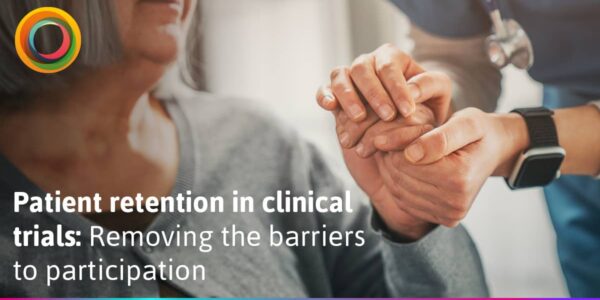

For people living with rare diseases, clinical trial participation is often more than an opportunity to contribute to research. It can be their best hope of accessing potentially life-changing therapies. Yet, the nature of rare diseases and the challenges patients face create significant barriers to joining and remaining in studies.
The challenge of travel and access
Rare diseases often involve progressive, debilitating symptoms that affect mobility, energy levels, and overall health. Clinical trial sites may be located hundreds of miles away, requiring frequent travel and overnight stays. For patients already managing complex medical needs, these demands can be exhausting and sometimes impossible to meet.
Take Friedreich’s ataxia (FRDA) as an example. This rare neuromuscular disease impacts balance, coordination, and mobility. Many patients use wheelchairs or walking aids, and traveling long distances can be physically and emotionally draining. Without specialist travel and accessibility support, even highly motivated patients may find it impossible to participate in a study.
We have seen this first-hand. In a recent study, we supported patients with Friedreich’s ataxia by providing seamless travel arrangements and efficient reimbursements, ensuring their participation was possible.
Similarly, families affected by Duchenne muscular dystrophy (DMD) often face overwhelming challenges when considering trial participation. Children living with DMD experience progressive muscle weakness and may require significant caregiver support, specialized transport, and accessible accommodation. Without tailored solutions, their ability to take part in research is severely limited.
Another example is Spinal muscular atrophy (SMA), where patients frequently rely on wheelchairs, ventilatory support, or specialized medical equipment. Traveling to trial sites under these circumstances can be incredibly complex, making in-home or decentralized models essential for ensuring inclusion.
These are just a few illustrations of a broader reality. Across rare disease communities, patients who stand to benefit most from research may also face the highest barriers to access. Without tailored solutions, many are excluded, leading to recruitment challenges, high dropout rates, and delayed timelines for sponsors.
How mdgroup bridges the gap
This is where mdgroup’s patient travel and decentralized services are crucial in rare disease clinical trials.
- Patient travel, accommodation & relocation
We manage every aspect of the journey, from compliant transport and mobility-friendly hotels to long-term relocations when extended participation is required. By making travel safe, accessible, and stress-free, we remove obstacles that might otherwise prevent enrollment or cause early withdrawal. - Decentralized clinical services
Through our global network of healthcare professionals, clinical logistics expertise, and digital platforms, we deliver decentralized trial models that ensure patients have what they need, when they need it. From trained HCPs conducting in-home visits to seamless management of medical equipment and supplies, every element is coordinated to reduce burden and keep studies running smoothly. - Personalized patient coordination
At the heart of our approach is our dedicated navigator team. These trained specialists provide one-to-one support for patients and caregivers, handling logistics, answering questions, and ensuring every detail of the journey is tailored to individual needs. With navigators as a constant point of contact, patients feel reassured and supported, while sponsors benefit from stronger engagement and higher retention.
Through our global network of healthcare professionals, medical logistics expertise, and digital platforms, we create hybrid and decentralized models that expand access, improve retention, and maintain high data quality.
Enabling participation, accelerating progress
In rare disease studies, every patient counts. Recruitment is already challenging, and every withdrawal has a significant impact on data quality, trial timelines, and the ability to bring new therapies to market. That is why mdgroup’s services are not just supportive but essential. They enable participation that might otherwise be impossible.
By reducing burden and removing barriers, we help sponsors create inclusive, patient-first research environments. The result is higher recruitment, stronger retention, better data integrity, and ultimately faster progress toward treatments that could transform lives for rare disease patients and their families.
Partner with us
At mdgroup, we specialize in supporting rare disease clinical trials with personalized patient travel, in-home visits, and decentralized solutions. If you are planning or running a rare disease study, connect with us to discover how we can help you recruit, retain, and support patients while accelerating progress toward life-changing therapies.