Across clinical research, sites are operating in an environment of sustained complexity. Trial designs are becoming more decentralized and data-driven, patient populations are more diverse and geographically dispersed and operational expectations continue to expand across every phase of a study.
It’s important to remember that sites are still the operational backbone of clinical research. They are responsible for delivering protocol adherence, ensuring patient safety, coordinating multidisciplinary teams, managing increasingly complex logistics and maintaining the integrity of study data, often while navigating resource and capacity constraints that have not evolved at the same pace as trial design.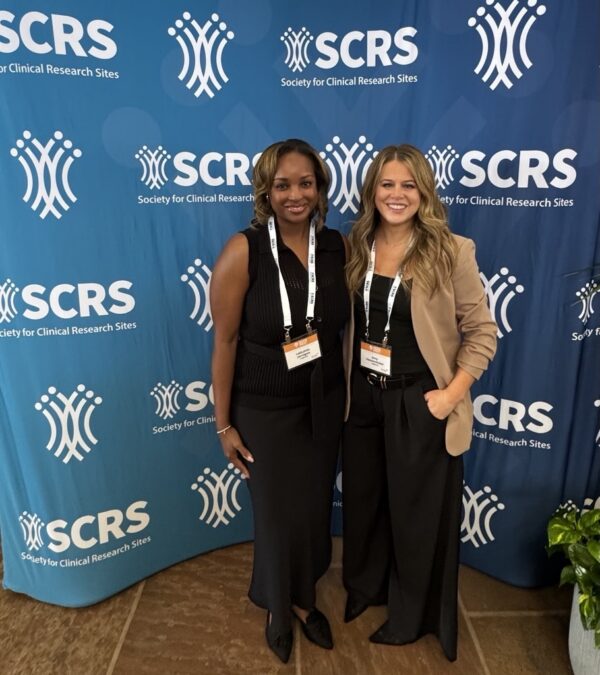
At mdgroup, we see firsthand the growing demands placed on research sites. As protocols become more complex and patient expectations continue to evolve, site teams are often balancing clinical responsibilities with an increasing volume of logistical and administrative tasks. That is why effective site support is not simply about adding services, but about removing barriers. By helping coordinate travel, delivering care closer to home and supporting patients throughout their participation journey, sites can spend less time managing operational challenges and more time focused on delivering successful studies and positive patient experiences.
Many of these challenges were reflected in conversations throughout SCRS West 2026, where discussions centered on site sustainability, operational capacity, innovation and the evolving needs of patients. In this article, we share some of the key themes that stood out to us and what they could mean for the future of research site support.
The growing pressure on research sites in clinical trials
Site teams are being asked to take on more across the clinical research than ever before. From recruitment and retention activities to patient travel coordination, visit scheduling, documentation and ongoing sponsor communication, the operational workload is not only increasing but also becoming more fragmented.
In many cases, this is not about sites being inefficient. Most are already operating at a very high level. The challenge is that more and more responsibilities sit alongside core clinical care, often requiring coordination across multiple systems, vendors and workflows that do not always connect in a seamless way.
This creates a day-to-day reality where site teams are constantly switching between clinical work and operational administration. Time that could be spent on patients or study delivery is often absorbed by logistics, coordination and managing multiple touchpoints across a study.
“Site teams are being faced with increasing pressure to enroll patients, deliver high quality data, and ensure study retention without letting anything fall through the cracks. It is an enormous undertaking to run all of the logistics of a successful clinical trial while continuing to support patients in the way they want to.”
– Amy Hessenthaler, Senior Director of Operations at mdgroup
As trials continue to evolve, the risk is not just increased workload. It is the gradual reduction of available capacity within site teams to focus on patient care, maintain consistency in delivery and support participants throughout their journey in a meaningful way.
What research sites need most right now
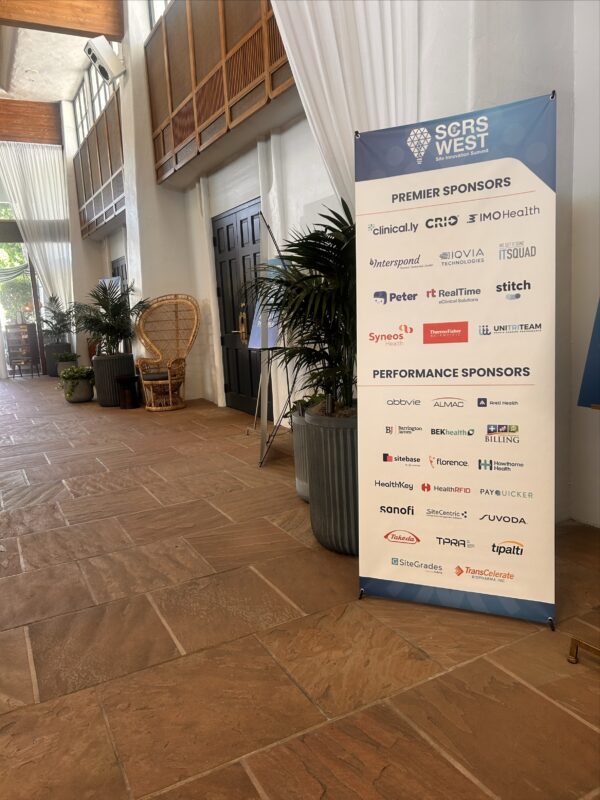
Society for Clinical Research Sites (SCRS) West 2026 provided an opportunity to hear directly from site leaders, industry experts and patient advocates about the challenges and opportunities shaping clinical research today.
While the topics varied from operational capacity and innovation to patient engagement and trial participation, many of the discussions came back to how supporting sites effectively requires understanding both the realities of trial delivery and the experiences of the patients taking part.
“SCRS West made it clear that sites still face challenges with administrative burden, being paid on time and accessing resources to provide patients with the support they need to participate in trials.”
– LaQuinta Jernigan, CCO at mdgroup
Two sessions in particular stood out to LaQuinta and Amy, who were representing mdgroup at SCRS West. The first explored how organizations can embrace innovation without losing sight of the people responsible for implementing it. The second provided a powerful reminder of the role trust, communication and support play in the patient experience.
The human experience in innovation
One of the most thought-provoking sessions at SCRS West was the opening keynote, The Human Advantage in Innovation, presented by Eric Rodriguez, International Keynote Speaker, Consultant and Mentor at Change Maker LLC.
The session explored how organizations can continue to innovate without overwhelming the people responsible for delivering that change. New technologies, decentralized approaches and evolving study requirements all have the potential to improve clinical trials, but only if they are implemented in a way that supports the teams using them.
One message that resonated throughout the session was:
“We must learn to adapt, connect, and translate.”
Eric expanded on the idea of adaptation in a way that felt especially applicable to clinical research:
“It’s not about saying yes to everything. It’s about being open to what’s possible.”
For sites, that distinction is important. Adapting does not mean adopting every new process, platform or way of working. It means remaining open to new approaches while ensuring they can be integrated in a practical and sustainable way.
The session also reinforced the importance of keeping people at the center of innovation. As Eric reminded attendees:
“The premium experience is human.”
Whether that experience is felt by patients participating in a trial or by site teams delivering it, successful innovation should reduce burden, strengthen communication and create capacity rather than adding complexity.
“In order to move forward and evolve, we must be flexible, have the ability to pivot and find new ways to solve the challenges we face. Connecting with each other and understanding what truly matters and what’s needed allows us to find new ways to support one another within this industry”
– LaQuinta Jernigan, CCO at mdgroup
The patient experience behind participation
One of the sessions that stayed with us after SCRS West was This Ends With Me: One Patient’s Journey From Fear to Advocacy, featuring patient advocate Diane Hardesty.
Diane shared her experience of living with Lynch Syndrome, a hereditary cancer condition that has affected multiple generations of her family. Throughout her journey, she has participated in numerous clinical trials and become a passionate advocate for research. Listening to her speak was a powerful reminder that clinical trials are not just about protocols, endpoints and timelines. They are about people navigating very personal healthcare journeys.
What stood out most was Diane’s explanation of why she continues to participate in research. She spoke about the role her doctors played in helping her understand that she was part of something important. That feeling of purpose, combined with trust in her care team, encouraged her to stay engaged in research over many years.
Her story also highlighted the importance of ongoing support. Patients do not experience clinical trials as isolated events. Research participation becomes part of a much broader healthcare journey that can span years or even decades. Diane recently shared that she is now facing an ovarian cancer diagnosis and is exploring treatment options, including potential clinical trials.
For research sites, her experience reinforced something that is easy to overlook. Patient engagement is built through trust, communication and support. When patients understand the value of their participation and feel supported throughout their journey, they are more likely to remain engaged, even when circumstances become challenging.
This is one reason why reducing barriers to participation matters. Whether it is helping patients travel to visits, bringing services closer to home or providing additional support throughout a study, small improvements in the patient experience can make a meaningful difference to both retention and overall trial success.
“mdgroup knows that every site and every patient is different. We have the ability pivot as needed to their individual needs and meet them where they are. Our model works because there is continuity for all. When patients and sites feel supported, it leads to better trial and patient outcomes.”
– Amy Hessenthaler, Senior Director of Operations at mdgroup
Supporting sites in practice
One of the recurring themes throughout SCRS West was the question of capacity. Sites are constantly being asked to do more, whether that means managing increasingly complex protocols, supporting decentralized study activities, coordinating patient logistics or navigating growing administrative requirements.
Many organizations are investing in dashboards, reporting tools and performance metrics to better understand where pressure exists. While these insights are valuable, they do not solve the challenge on their own. Identifying a bottleneck is very different from removing it.
For research sites, capacity is often lost to the countless coordination activities that happen around the patient journey. Scheduling visits, arranging travel, managing communication across multiple vendors and supporting patients outside of the clinic all take time and resources away from core study activities.
This is where the right support can make a meaningful difference.
At mdgroup, our goal is to help reduce the operational burden that sits with sites by taking ownership of many of the logistical and patient-facing activities that can create pressure throughout a study. Through services such as patient travel and logistics coordination, home health visits and concierge-style patient support, we work as an extension of the site team rather than another layer added on top of it.
“We act as extension of the site team, not another layer. By managing coordination and patient logistics, research teams are free to focus on core study activities.”
– LaQuinta Jernigan, CCO at mdgroup
The difference is not simply the services themselves, but how they are delivered. When support is coordinated through a single partner, sites spend less time managing multiple vendors, chasing updates and troubleshooting logistical challenges. Instead, they can focus their attention on patient care, recruitment, retention and study delivery.
This becomes even more important as decentralized and hybrid trial models continue to expand. These approaches can improve access and flexibility for patients, but they also introduce additional coordination requirements. Without the right support structure, complexity is often shifted rather than removed.
Effective site support should simplify workflows, reduce unnecessary touchpoints and create capacity where it is needed most. When operational burden is reduced, sites are better positioned to focus on delivering high-quality research and supporting positive patient experiences.
“Site coordinators are usually working on many different trials at a time and each of those studies has different requirements and systems that the site team has to follow. mdgroup is able to simplify processes and reduce burden instead of adding to it.”
– Amy Hessenthaler, Senior Director of Operations at mdgroup
The benefits extend beyond site operations. When travel, scheduling and other logistical challenges are managed effectively, patients experience fewer barriers to participation and greater continuity throughout their trial journey. That can have a meaningful impact on engagement, retention and the overall study experience.
“Participating in a clinical trial is a huge commitment for a patient and oftentimes their families and caregivers as well. When patient support services are provided through a single point of contact who can answer all their questions throughout the course of the trial, it alleviates much of the complexity and gives them confidence in the care they are receiving.”
– Amy Hessenthaler, Senior Director of Operations at mdgroup
Continuing the discussion on site capacity and patient support
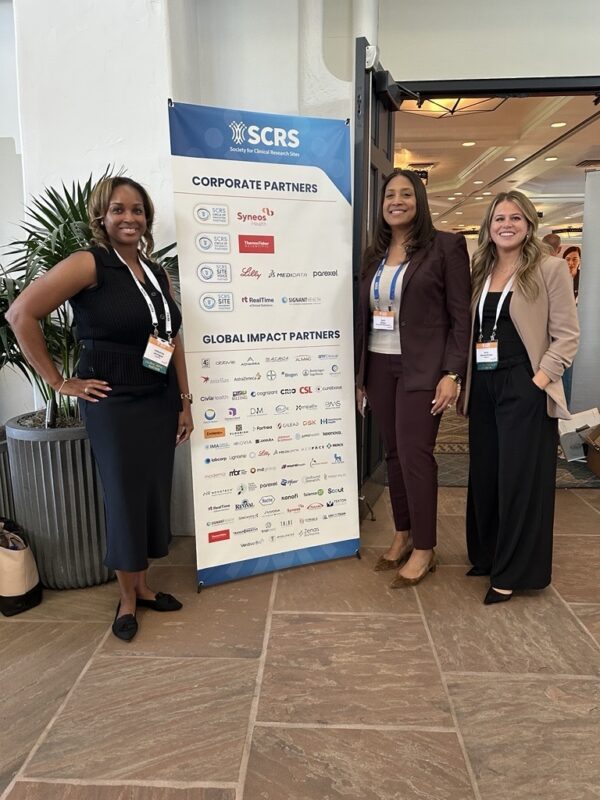
One of the most valuable aspects of SCRS events is the opportunity to hear directly from the people delivering research every day. While sessions provide important insights, many of the most meaningful conversations happen between presentations, in networking discussions and through the sharing of real-world experiences from sites across the industry.
For us, one of the strongest takeaways from SCRS West was that sites are looking for practical solutions that help them manage growing complexity without compromising the patient experience. Whether the discussion focused on innovation, patient engagement, operational capacity or decentralized trial models, the underlying challenge was often around creating sustainable ways to support both site teams and patients.
”SCRS provides meaningful pathways to hear firsthand what sites need from sponsors and solution providers. It’s a great opportunity to learn about what truly burdens sites and how we can create solutions to provide support.”
– LaQuinta Jernigan, CCO at mdgroup
We look forward to continuing these discussions at the SCRS Global Site Solutions Summit, taking place October 15–18 in Orlando, Florida, and connecting with site professionals, sponsors, CROs and industry partners from across the clinical research community.
We are also planning a site-focused networking event during the summit, creating an informal space for site teams to connect, share experiences and discuss the realities of trial delivery with peers who understand those challenges firsthand – more details to come.
Better support creates better clinical trials
SCRS West made it clear that sites are being asked to manage more complexity while still delivering the same core outcomes for patients and studies.
The pressure is not about capability, but about capacity. A lot of site time still gets pulled into coordination and logistics that sit around the patient journey rather than the research itself.
Better support for sites is really about taking some of that load away so teams can focus on patients and running studies properly.
If you’re exploring ways to reduce site burden, improve patient support and create additional capacity within your studies, learn more about how mdgroup works alongside research sites to support trial delivery. Learn more about our research site solutions here.