At mdgroup, we see every day how personalized support and patient-centered care can transform a participant’s experience and, ultimately, the success of a trial. When patients feel supported, understood and valued, they are more likely to remain engaged, adhere to study requirements, and ultimately help drive better outcomes.
For many patients and families, this support is essential. As one participant shared:
“The quality of support I received was exceptional. The staff who took care of all my travel arrangements were genuinely concerned about me. Words cannot express my gratitude for all that they did to make my trip successful. THANK YOU!!!”
Another reflected on the consistency of that support over time:
“The navigators I’ve worked with have been EXCEPTIONAL! Even with the few curve balls I’ve thrown them over the past several years they’ve accommodated me graciously.”
These experiences highlight a simple truth of when patients feel genuinely cared for, the entire clinical trial experience improves. Just like one patient shared:
“The navigator team was again quick and efficient in actioning my travel and accommodation requests for my next 2 trial visits. They kept me up to date with progress status. Thanks again for making it very easy to participate in this trial since I live 600 km from the site.”
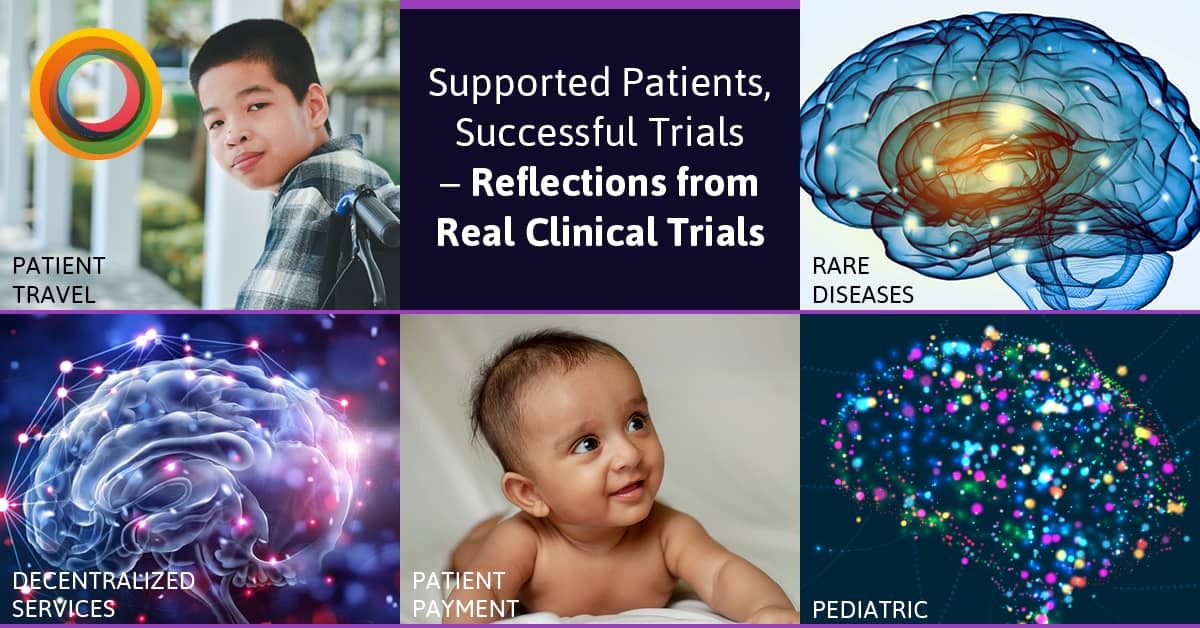
In this blog, we reflect on real clinical trials and explore how tailored support across payments, travel, decentralized services, and specialized populations has made a meaningful difference to both patients and sponsors. These insights show why supported patients are key to successful trials.
Removing barriers through patient payments
For many patients, participating in a clinical trial comes with hidden financial pressures. Travel costs, time away from work, childcare, and other out-of-pocket expenses can quickly become overwhelming, particularly in long-term studies.
In one long-running global trial, patients were required to attend frequent visits over an extended period. Without a clear, reliable reimbursement process, this level of commitment could easily have led to dropout or disengagement. By implementing a patient-centric payment solution, mdgroup ensured that participants were reimbursed quickly, transparently, and in a way that suited their individual circumstances.
Reducing stress and building trust had and a significant impact since patients no longer had to worry about financial strain or complicated processes. This led to improved retention, stronger patient satisfaction and a more stable study overall. It’s a clear reminder that when financial barriers are removed, patients are better able to participate and focus on their health fully.
To see how this approach created meaningful, long-term improvements for both patients and sponsors, read the full case study here.
Making global travel feel seamless
Travel is one of the most common challenges in clinical trials, particularly for patients with rare or complex conditions. For individuals living with conditions such as Friedreich’s ataxia, even short journeys can be physically demanding and logistically complex.
In a global study supporting these patients, travel wasn’t simply about booking flights and hotels. It required careful coordination, sensitivity to each patient’s condition, and flexibility to adapt to changing needs.
mdgroup worked closely with patients and their families to arrange accessible transport, appropriate accommodation and personalized itineraries. Importantly, support didn’t stop at logistics but it extended to real-time communication and reassurance throughout the journey.
For many patients, this level of care made participation possible where it otherwise wouldn’t have been. It also reduced anxiety and fatigue, helping patients arrive at study visits feeling prepared rather than overwhelmed.
By turning a potentially stressful experience into a smooth and supported one, travel becomes an enabler of participation rather than a barrier. Discover how tailored travel support enabled patients with complex needs to take part in a global trial here.
Bringing trials closer to patients through decentralized services
Not every patient can travel to a clinical site and for those with rare diseases or complex health needs, this can be a significant limitation. Decentralized clinical trial (DCT) solutions are changing that by bringing care directly to patients.
In a study involving patients with Danon disease, a rare and serious genetic condition, decentralized services played a crucial role. Through mobile healthcare visits, patients were able to receive care and complete study requirements from the comfort of their own homes.
This approach reduced the physical and emotional burden of participation, particularly for patients who may already be managing debilitating symptoms. It also allowed caregivers to remain closely involved, creating a more supportive environment overall.
From a trial perspective, decentralization helped expand access to a wider patient population and improved retention by making participation more manageable. For patients, it meant being able to contribute to vital research without sacrificing their quality of life.
Enabling access in rare disease research
Rare disease trials often face unique challenges with their small, geographically dispersed patient populations, limited treatment options, and high unmet need. For patients, the opportunity to participate in research can be life-changing, but accessing these trials is not always straightforward.
In a hybrid study for cerebral adrenoleukodystrophy (cALD), patients and families were spread across multiple countries, each with their own logistical and healthcare challenges. Coordinating participation required a highly personalized, flexible approach.
mdgroup supported global participation by combining travel coordination with localized services, ensuring patients could access study sites or receive care closer to home where possible. This hybrid model reduced disruption to patients’ lives while maintaining the integrity of the trial.
For families navigating a rare disease diagnosis, this level of support and logistics management provides reassurance, stability and the opportunity to take part in research that could shape future treatments.
Supporting children and families in pediatric trials
Pediatric clinical trials bring an additional layer of complexity. Participation doesn’t just involve the patient as it also involves parents, caregivers and often siblings, all of whom are balancing emotional and practical considerations.
In a study involving children with complex needs, mdgroup developed a tailored support model designed around both the child and their family. This included flexible scheduling, specialist travel arrangements and close coordination with caregivers to ensure every aspect of participation was manageable.
Small details made a big difference as we helped minimize waiting times, ensuring comfortable travel environments, and providing clear, compassionate communication at every stage. These considerations helped reduce stress for families and created a more positive overall experience.
As a result, participation became more accessible, and families felt confident continuing in the study. In pediatric trials especially, trust and support are essential and they can significantly improve both recruitment and retention.
Putting patients first, every step of the way
Every patient has a unique story, and every trial is stronger when those stories are supported. Across the studies in this blog, it’s been clear that when patients feel cared for, staying engaged becomes much easier. When barriers are removed, participation becomes possible. And when support is truly personalized and human, the experience becomes manageable and meaningful.
As one family shared:
“The navigator team is absolutely wonderful. They genuinely value families as people. Even more, they understand the complexities of the journey and does their best to make travel comfortable, as convenient as possible, and dignified for our son with his disabilities. The team is a joy to partner with on our journey.”
And from a study partner’s perspective:
“Excellent and superb communication, arrangement and service. Study subject was very much delighted to receive such an excellent care and support. I am 1000% satisfied and strongly recommend for all future needs for study subjects.”

These experiences are echoed across the wider clinical research landscape. In our mdgroup live webinar series, we shine a spotlight on the human stories behind trials, stories that are too often hidden behind data and processes.
In our episode “From Rare Disease Patient, to Rare Mom & Advocate,” Sarah Woods shares her journey navigating diagnosis, caregiving, and clinical trial participation. Her perspective highlights the real-life challenges patients face beyond the protocol, and why true patient-centred research must go beyond consultation to genuine partnership. Her story is a powerful reminder that behind every data point is a person, a family, and a daily reality that must be understood and supported. Watch the full episode to hear her story firsthand here.
At mdgroup, we know that supported patients lead to successful trials. By prioritizing patient-centered care, seamless logistics, and personalized support, we help trials run smoothly while making a real difference in participants’ lives.
When your patients feel valued, supported, and engaged, they’re more likely to stay in the trial, leading to higher retention and better outcomes for everyone involved.