Bringing the Trial to the Patient—Without Adding Pressure to Sites
Clinical trial sites are under more pressure than ever before. Increasing protocol complexity, staffing constraints, and growing patient management demands are stretching site teams to their limits.
At the same time, sponsors are under pressure to deliver faster, more efficient trials with better outcomes.
One of the most effective ways to address both challenges is through home health services in clinical trials. By reducing the burden on patients, home health plays a critical role in easing site pressure—while improving recruitment, retention, and overall trial performance.
The Growing Pressure on Sites and Sponsors
Clinical trial sites are under significant operational pressure. Staffing challenges in particular are a major concern, with research showing that nearly half of sites report staff shortages, while over 50% cite lack of experience and high turnover as ongoing issues.
Alongside workforce constraints, sites are also managing infrastructure limitations, administrative complexity, and increasing demands around documentation and patient communication. In some studies, as many as 64% of participants struggle to understand informed consent materials—placing additional pressure on site teams to provide clarity and support.
These challenges highlight the growing gap between the demands of modern clinical trials and the resources available at site level.
At the same time, sponsors and CROs are navigating:
- Delays in patient recruitment
- High dropout rates
- Protocol deviations
- Increasing trial costs
While these challenges may appear separate, they are closely connected—and often stem from the same root cause: the burden placed on patients during trial participation.
Reducing Patient Burden Through Home Health
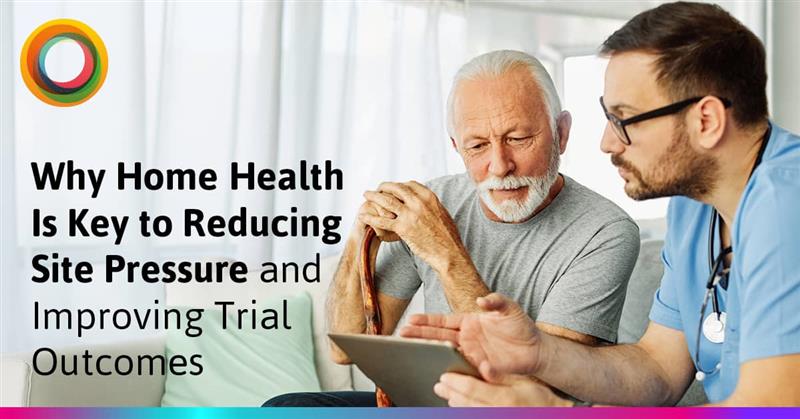
Home health services in clinical trials bring study activities directly to patients, reducing the need for frequent site visits and making participation more accessible.
These services can include:
- In-home clinical procedures and mobile nursing
- Remote patient monitoring
- Hybrid trial support models
- Patient coordination and logistics management
By shifting appropriate elements of the trial into the home, sponsors and sites can significantly reduce the burden placed on participants—without compromising protocol integrity.
Reducing Site Pressure: The Benefits for Clinical Trial Sites
For sites, home health services act as an extension of their capabilities. Through tailored support for research sites, these services help reduce operational pressure while maintaining high-quality patient care.
Rather than increasing workload, they help to offload non-core responsibilities, enabling site teams to focus on critical clinical tasks.
Key benefits include:
- Reduced in-clinic visit volume, easing pressure on staff and facilities
- Less administrative burden, particularly around scheduling and patient coordination
- Improved patient compliance, leading to fewer missed visits and follow-ups
- Increased capacity, allowing sites to support more patients without additional resources
Ultimately, home health enables sites to do more—with less strain.
Improving Trial Outcomes for Sponsors and CROs
For sponsors and CROs, the impact of home health services is both operational and strategic.
By reducing patient burden and site pressure, home health services directly influence some of the most critical trial metrics:
- Faster recruitment, by expanding access to patients regardless of location
- Improved retention, as participation becomes more manageable for patients
- Greater protocol adherence, supported by flexible and patient-friendly visit options
- More consistent data collection, even in complex or long-term studies
The result is a more efficient, resilient trial model that supports both speed and quality.
A Connected Impact Across the Trial Ecosystem
What makes home health particularly powerful is its ability to deliver combined benefits across patients, sites, and sponsors.
- Patients experience less disruption to their daily lives
- Sites operate more efficiently and sustainably
- Sponsors achieve stronger performance and more predictable timelines
Rather than adding complexity, home health simplifies the clinical trial experience—creating a more connected and effective trial ecosystem.
Real-World Impact: Supporting Patients, Strengthening Trials
In a global rare disease study, mdgroup implemented a home health and patient support model to reduce the burden of frequent site visits.
By coordinating in-home clinical procedures and managing patient logistics, the study achieved:
- A significant reduction in missed visits
- Improved patient retention across multiple regions
- Reduced administrative pressure on site teams
This approach not only enhanced the patient experience but also helped sites and sponsors maintain momentum in a complex, multi-country trial.
The Future of Clinical Trials Is Hybrid and Patient-First
The future of clinical trials isn’t about replacing site-based research—it’s about enhancing it.
Home health services in clinical trials play a critical role in enabling hybrid and decentralised models that better reflect the realities of patients’ lives, while supporting the operational needs of sites and sponsors.
At mdgroup, we combine digitally enabled solutions with expert patient support teams and in-home clinical services to deliver seamless, patient-first trial experiences.
Because when you reduce burden for patients, you reduce pressure on sites—and improve outcomes for everyone.
Supporting Better Trials Starts with Supporting Patients
Discover how mdgroup helps sponsors and CROs reduce site burden, improve retention, and deliver more efficient clinical trials through home health and patient-first solutions.