
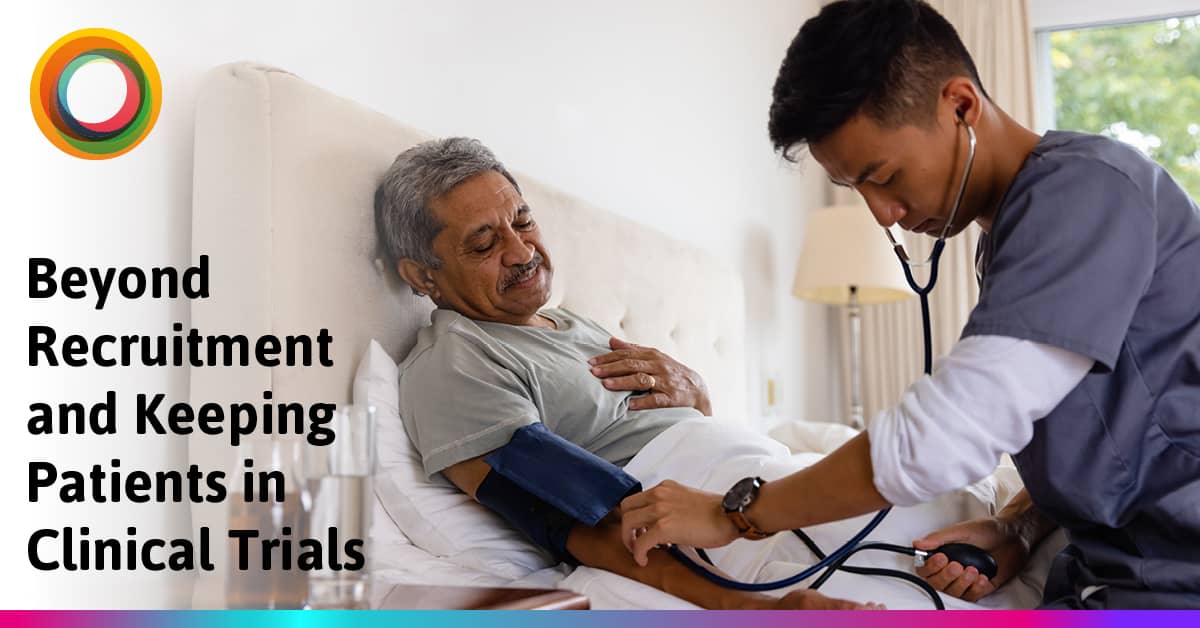
Recruiting patients for a clinical trial is only one part of the process. Once enrolled, patients need the right support to take part in study visits and procedures throughout their trial, sometimes over several months or even years. And not every aspect of that participation needs to happen at a research site.
In-home clinical services give sponsors, CROs and research sites another way to deliver parts of a trial. From blood draws and sample processing to medication administration and clinical assessments, mobile healthcare professionals can support a range of protocol-required activities in patients’ homes.
So how can this support patients beyond recruitment and help them remain in a study? Drawing on the experiences of mdgroup’s mobile health nurses and insights from clinical and research site professionals, we look at what goes into delivering in-home clinical visits, the range of activities they can support and how this approach can benefit both patients and study teams.
Getting patients into a trial is just the start
Recruiting patients is a major undertaking for any clinical trial, but enrollment figures alone don’t tell the whole story. Patients need to remain in a study long enough for researchers to collect the data required, and keeping them involved throughout can be challenging.
There are many reasons a patient may decide to leave a trial early, and not all of them are related to the treatment or their experience of the study itself. The practical demands of participation can also play a part. In one study, 38% of patients who dropped out of a clinical trial early said they felt site visits were stressful.
We heard a first-hand example of these demands in one of our mdgroup live episodes, when rare disease patient, rare mom and advocate Sarah Woods spoke about being offered a place in a clinical trial. As she learned more about the preparation and appointments involved, she began to consider how it would fit around her life as a working mother. She explained that even routine blood draw appointments could take up half a day, a significant commitment when balancing work and caring responsibilities. Ultimately, she decided not to move forward with the trial.
For sponsors, CROs and research sites, patient retention has a direct bearing on study delivery. Patients leaving a study early can mean incomplete data, additional recruitment efforts and increased pressure on study timelines and budgets. But the practical demands of participation are also something sites see firsthand. During our mdgroup live episode with research site leader Yesenia Salinas, she highlighted challenges including transportation, childcare and patients traveling more than 60 miles to attend visits. She also spoke about how in-home visits and transportation support could help sites with both recruitment and retention. While not every dropout can be prevented, reducing avoidable barriers and making participation more manageable can help support patients throughout their involvement.
This is why it’s important to look beyond recruitment and consider the support patients need for the duration of a study.
Bringing study visits to the patient
For some patients, getting to a research site for every scheduled visit can be one of the biggest challenges of taking part in a clinical trial. This can be particularly difficult for those living in remote areas, managing complex health conditions or caring for children who need specialist support. In these situations, bringing certain study activities into the home can make a real difference to whether participation is practical and sustainable.
Travel and geographical barriers can also influence whether someone takes part in a trial in the first place. One survey found that 42% of patients cited travel inconvenience as the reason they declined a trial. Research shared by Jean-Sébastien Gosuin, Founder of Curewiki, during our mdgroup live episode adds another perspective. Based on the responses, his findings showed that men were willing to travel up to 100 km to participate in a trial, compared with 50 km on average for women. This difference highlights how the distance patients are able or willing to travel can vary, and how family and caring responsibilities may influence those decisions. Research from the Milken Institute also highlights the impact of geography, with up to 60% of patients seeing geography and distance to study sites as a key barrier to enrollment and engagement.
Through in-home clinical services, mdgroup can arrange for qualified healthcare professionals to carry out protocol-required visits in a patient’s home. This can reduce the need for repeated travel while allowing patients to continue receiving the clinical support their study requires. It can also help sponsors and CROs reach patients who may otherwise face significant geographical or practical barriers to participation.
One example comes from mdgroup nurse Shelby Read, who supported a family taking part in a pediatric rare disease trial. Without in-home nursing support, the family would have needed to relocate to the US to access the treatment and clinical care required by the study. Instead, Shelby was able to provide visits in the family’s home, carrying out assessments, monitoring and treatment administration. This meant the child could take part in the trial without the family having to move countries.
mdgroup nurse Anna Spiszak also supported a pediatric patient living in a remote area, visiting the family every two weeks over a six-month period. Having clinical support delivered at home made it possible for the family to continue participating without the added burden of frequent long-distance travel.
These experiences show how in-home clinical services can do more than make visits more convenient. They can help overcome barriers that might otherwise prevent patients from accessing a trial or make it difficult for them to continue. For study teams, this creates more flexibility in how certain clinical activities are delivered and can help make participation possible for a broader range of patients.
More than taking vital signs
Depending on the study protocol, mobile healthcare professionals can carry out a range of clinical procedures and assessments during in-home visits that would traditionally take place at a research site. This means decentralized clinical services can support a much broader part of the study visit than simply checking in with patients or monitoring their general wellbeing.
At mdgroup, our mobile health nurses and qualified healthcare professionals can support activities including blood draws, vital signs, ECGs, sample collection and processing, patient assessments and investigational product administration. They can also support more specialized requirements such as cardiac monitoring, spirometry, physical therapy and other study-specific procedures.
The nurses’ experiences demonstrate the scope of this work. During pediatric rare disease studies, for example, visits can involve several hours of clinical activities, including blood and urine sample collection, ECGs, physical examinations, study medication administration and patient monitoring. In other studies, nurses may need to process samples at the patient’s home before arranging their shipment to the appropriate laboratory.
But carrying out these procedures at home also means understanding the person behind the protocol. In her interview with mdgroup, nurse Marleen Bogaert recalled visiting a young boy who was extremely frightened of blood draws. She spent around 45 minutes helping him feel comfortable before he agreed to the procedure. Taking the time to build his confidence made it possible to complete the blood draw and collect the required samples.
Delivering these activities outside a traditional research site requires careful planning and the right clinical expertise. Healthcare professionals need to understand the study protocol, prepare the correct equipment and supplies, follow the required procedures and ensure that samples and study documentation are handled appropriately.
Keeping visits going when things don’t go to plan
Clinical trials involve carefully planned schedules, but the reality of delivering visits doesn’t always go according to plan. Severe weather, travel disruption or unexpected changes in a patient’s circumstances can all affect whether a scheduled visit goes ahead. When visits involve time-sensitive procedures or medication administration, finding a way to adapt can be particularly important.
In-home clinical services give study teams another option when these situations arise. With qualified healthcare professionals able to deliver protocol-required activities outside the research site, visits may be able to go ahead even when travel or other circumstances make the original arrangements difficult.
One example comes from Alessandro, an mdgroup mobile healthcare professional in Florence, Italy. While supporting a pediatric patient with a rare disease, he faced severe flooding that turned local roads into rivers. On another visit, he experienced two tire punctures, with no garage or assistance nearby. Despite these challenges, he found a way to continue his journey and reach the family’s home, completing the full eight-hour visit and ensuring the child received the scheduled care and treatment.
Shelby Read also faced a different challenge during a pediatric rare disease study when a snowstorm disrupted the family’s travel plans. Rather than allowing the disruption to affect the scheduled treatment, Shelby adjusted her arrangements and carried out the visit at the family’s home, ensuring the medication could be administered safely and on time.
The work behind every in-home clinical visit
An in-home clinical visit involves much more than sending a healthcare professional to a patient’s home. Every visit needs to be planned around the study protocol, the patient’s requirements and the clinical activities being carried out. The right healthcare professional needs to be selected, equipment and supplies prepared, and all the necessary arrangements made before the visit takes place.
For mobile health nurses, preparation often starts well before they arrive at a patient’s home. They review the study protocol and visit requirements, check the equipment and supplies they will need, plan their travel and consider any specific patient needs. As mdgroup nurse Rachel Jiang explains, this can mean preparing for a difficult blood draw by bringing warm packs or butterfly needles, while nurse Sven Schäfer describes visits involving extensive sample collection and processing at the patient’s home. Getting these details right helps ensure that the visit runs smoothly and that all procedures are carried out as required.
There is also a wider operational process behind each visit. At mdgroup, our teams coordinate clinical staffing, patient scheduling, medical supplies, investigational product distribution and laboratory logistics. Our US and European medical distribution centers support the preparation and delivery of study materials, while our clinical and operational teams work together to ensure visits are carried out according to study requirements.
Just as importantly, these services are designed to work alongside research sites and study teams. mdgroup does not replace the site or take over its relationship with the patient. Instead, we provide additional clinical and logistical support, helping sites deliver certain study activities outside their facilities. This can ease some of the practical demands on site teams while giving patients another way to complete required visits.
Making continued participation possible
Keeping patients in a clinical trial takes more than successful recruitment. It means thinking about the practical demands of participation throughout the study and finding ways to make those demands more manageable. For some patients, that might mean avoiding repeated long-distance journeys. For others, it could mean having a qualified healthcare professional carry out clinical procedures at home or finding a way to keep a scheduled visit on track when circumstances change.
This is where decentralized clinical services can make a meaningful difference. By bringing together qualified clinical staff, in-home visits, patient coordination and clinical logistics, mdgroup helps sponsors, CROs and research sites deliver certain aspects of a study beyond the traditional research site.
Importantly, this support works alongside existing site teams, not instead of them. Research sites remain central to the study, while mdgroup provides additional clinical and operational resources to help address practical barriers to participation and support the delivery of study activities.
Every study and every patient has different requirements, but making participation more accessible and manageable can help give patients the opportunity to remain involved. And for study teams, having the right support in place can make a difference to both the patient experience and the delivery of the trial.
Keep the Human Touch at the Heart of Your Clinical Trial
Technology can streamline clinical research, but personalized support makes the difference for patients. Discover how mdgroup helps reduce patient burden, improve experiences, and support retention throughout the clinical trial journey.