mdgroup live is our webinar series shining a spotlight on the people and stories behind clinical research. Too often, the human voices behind trials are hidden behind data and paperwork. This series changes that by focusing on the people and experiences that make research truly human. Here you can rewatch the full episode or read the highlights below.
In our fourth episode, “Lessons from the Front Lines of Research Sites,” Yesenia Salinas joined our Founder and CEO, Miriam Dervan, to share her perspective on the realities of running a clinical research site. Drawing on nearly two decades of experience, the conversation explored the operational challenges sites face, the importance of supporting underserved communities, and how sponsors, CROs and service providers can work more closely with sites to improve patient access, recruitment and retention.
Highlights
- [00:00] Introducing Yesenia Salinas
- [03:26] Building research sites that put communities first
- [06:14] Recruitment challenges in underserved communities
- [08:50] The hidden operational burden facing research sites
- [11:25] Breaking down barriers to patient participation
- [14:05] Taking clinical research into local communities
- [17:30] What sponsors and CROs often underestimate about research sites
- [22:07] What sets high-performing research sites apart
- [23:39] Raise your voice and make noise
Introducing Yesenia Salinas
 Miriam Dervan: Welcome to everybody, to our fourth mdgroup live webinar. For those of you joining us for the first time, mdgroup live is our webinar series spotlighting mainly the people and their stories, and listening to patients, and listening to wonderful people like Yesenia, who has a lot of information and knowledge and experience and expertise around the site arena.
Before we plunge in with Yesenia, just for those of you who haven’t heard of mdgroup or don’t know much about us, just a brief overview. We deliver highly personalized patient support services. We drive engagement, retention, and outcomes in clinical trials through passionate care. We have patient payments, in-home participation, and also seamless travel and coordination. We remove barriers to participation to reflect the realities of patients’ lives, which Yesenia knows very much about.
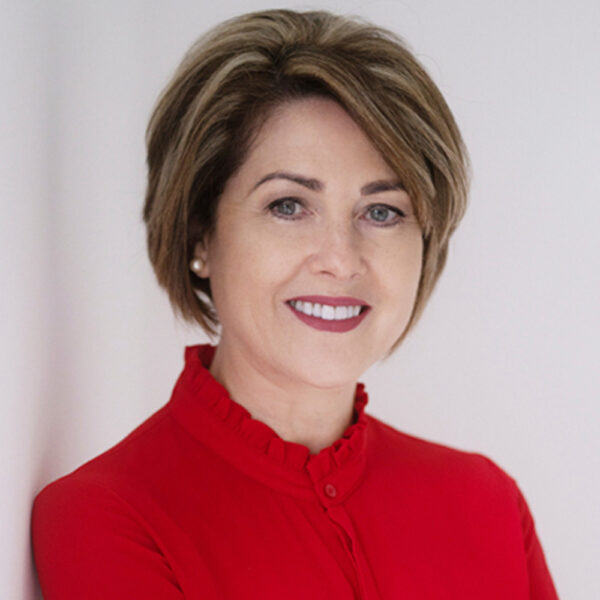
Absolutely delighted to welcome Yesenia Salinas. Yesenia is the Founder of Phoenix Research Alliance, and she’s the CEO of MedPoint Research Institute, which is a site in Texas. She has extensive experience building and leading high-performing research sites, and she brings a unique perspective on the realities, challenges, and opportunities facing sites and patients in clinical research today.
But before we dive into all of that, Yesenia, welcome! This is your very first webinar! And we are honored to have you, as you are the first time on a webinar, we are hosting you and we’re just thrilled and honored to do so.
So, tell us a little bit about yourself and how you got into clinical research.
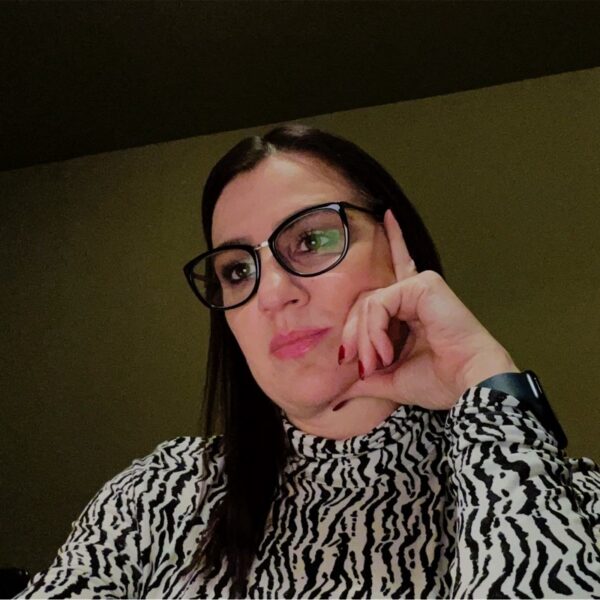 Yesenia Salinas: Thank you so much for the warm welcome, Miriam, and thank you for inviting me to collaborate with you. I think this is a great opportunity for anyone who is in the research industry, especially from a site level, to be on, because it brings a lot of exposure and highlights what we’re doing.
I got into clinical research dating back to 2007. I started with a huge urology group in South Texas as a study coordinator, and from there, I have been able to excel in different therapeutics as a site supervisor manager, but mainly coordinating. I’ve done oncology, dialysis, nephrology, ophthalmology, retina, a little bit of liver disease, and I am now in a place where I have been very blessed to be able and consult for other sites and to open up our own research site.
Building research sites that put communities first
Miriam: Wow, that’s amazing, because you get to understand the challenges and difficulties and burdens of what the other sites are experiencing. I’m sure you see the same pattern as well, which we can talk about a little later. But first of all, tell us about your Phoenix Research Alliance. What is that?
Yesenia: Phoenix Research Alliance is an entity, it’s a place that we build together, my partner Sandy, and I, because we saw a gap in sites that needed support with mainly the administrative work, like study startups, contracts and budgets.
Anything and everything that takes from your coordinator’s time so that they can be proactive is where we found a need within the sites. We consult for different sites, especially locally, and we’ve expanded to Little Rock, so we’re doing a little bit of the administrative work, like centralized work for them, and trying to take that burden off their hands.
Miriam: Yeah, that’s amazing, because that’s what the sites mostly complain about and that’s their pain points and their challenges. There’s so much admin work, which, of course, as I say, we’ll go into a little bit deeper in the conversation, but that sounds amazing, and I’m sure you’ve helped a lot of sites, and you can see their pain points and challenges, Yesenia.
So because of that and now you understand what sites go through – why did you then decide to set up your own site? You now have MedPoint Research Institute. So, congratulations first of all. Well done, you opened it in June. Why did you decide to make the investment?
Yesenia: I decided to do that investment because it is something that I am very passionate about and I highly believe in.
Clinical research has not only been a part of my professional career, but it has been something that has been deeply rooted in my family. I have had my dad go through lung cancer, and I involved him in a clinical study. My brother recently had colon cancer, another study.
I’m in South Texas in McAllen, so geographically speaking, if you’re familiar with the area, it is a community that is amazing to be in, but it has a high prevalence of metabolic disease and obesity; there’s a high incidence of cancer, and we are lacking good research sites. There is some in the area, and there has been a lot more since I started in 2007. But I found an opportunity to bring expertise after doing this for 20 years, and to do an actual research site where I could put everything that I’ve learned and bring a place where I could bring the community together and engage with them more closely.
Recruitment challenges in underserved communities
Miriam: Wow, all right, I didn’t realize that about your brother, and I know, because usually these kinds of things spring us into motion to change lives, and we try and change lives. My dad died of colon cancer as well, and I had a young cousin who was only 36; he passed away with colon cancer. They’re very close to our hearts, and we all want to try and help and change the world a little bit. So fair play to you, Yesenia; that’s amazing.
Where you are in Texas, Yesenia, you talked about the communities; there’s a lot of obesity, cancer, that kind of thing. What are the recruitment and enrollment challenges that you face in your communities where you are and around Texas?
Yesenia: There are several challenges, especially when you have communities in South Texas that are Hispanic and Latino, so the majority are speaking Spanish. Bringing opportunity in that area that is understandable to these patients, and we are able to relate to them, is sometimes a challenge, because they don’t have someone that can speak the language at home.
There are challenges of patient populations not having insurance in our area. They’re either uninsured or underinsured, and they have challenges with seeking the right medical care.
There are definitely a lot of challenges that we face from a site standpoint in the area to date. So we have to do a lot of outreach and a lot of education for these patients.
Miriam: Yes, and that’s what we hear a lot of as well about educating – educating the communities and the patients, and what there actually is out there for them and how we can get over those types of hurdles.
We’ve got the challenges with the enrollment and the recruitment. What in your region would do well, do you think? Like from a therapeutic area, what actually does really well in terms of enrollment and recruitment in your specific area in Texas?
Yesenia: From experience, Miriam, and I’m going back to my ophthalmology retina times, we were top enrollers in diabetic trials. Diabetic macular edema patients, I think we’re like a hotspot for obesity and diabetes. Anything with diabetes or metabolic disease, you’re going to be a top enroller in this area. I think maybe cardiovascular as well has gone up.
The hidden operational burden facing research sites
Miriam: Very interesting. Let’s get down into sort of a little bit of the nitty-gritty. What would be some of the major operational burdens that sites have to deal with, that maybe sponsors may not necessarily see, but go on in the background? Because you’d have a lot of experience there, particularly with the Phoenix Alliance. What, from your perspective, are the main burdens and pain points?
Yesenia: From my personal experience and working in the industry as a coordinator, as a supervisor, doing consulting work at the research site, a lot of the things that I’ve seen are operational overload. Like your protocols, they’re more and more complex now than before. Not that they weren’t before, but I feel like there’s more complexity; there’s a lot of technology involved.
There are a lot of different platforms that sites have to use and train on. There are just duplicative systems for everything that you have to do on a daily basis, and if you’re a site that has different studies going on at once, that becomes very burdensome for the coordinators and the staff members that are working on that.
There are also staffing constraints. Especially in our area, you don’t have a lot of staff that are trained, or are already trained in research. You have to take a lot of time to train new members if you have turnover, so staffing constraints are always something that affects sites directly.
The financial strain. Another thing that is huge, and I’ve heard even from my PIs from consulting just recently, a couple of weeks ago, sponsors still want to do the quarterly payments, and that’s not feasible. We are an operational site with business overheads and needs, and I think that they need to restructure their feasibility and financial payments to align with what we are doing on our end.
Another big one that I can talk to is the patient transportation. In our area, we don’t have any entity other than Uber or maybe the Medicare Transportation or a Lyft, and we have patients that come from over 60 miles.
So, childcare, time off, transportation, anything that has to do with enrollment and retention for patients is definitely huge, from what I know.
Breaking down barriers to patient participation
Miriam: I was actually going to ask you about that as well, because we hear all the time about the patients, the families, the caregivers. We are at the front end of them. The phones and the families are ringing us up, and the patients are calling us, and they’re crying on the phone because they can’t get to the site.
I was going to ask you about retention. I know we provide those services, but from your experience, are those services really needed now in this day and age, so that from a geographical point of view we can actually get to these patients who are very ill and just can’t leave their homes, or they need help to get to their sites?
Yesenia: 100%, Miriam. That’s absolutely something that sites need to have in alignment with what we are doing. If you’re able to support a site directly with your type of services, especially here with us at McAllen, that would be major. It would definitely help us with recruitment and retention. The patients that are coming from over 60 miles, if we could do a decentralized visit – have a nurse go and do something that we’re able to accommodate at their home, or even provide transportation to bring them to and from their home to the site visit – I think that would definitely support every site that I’ve talked to or have encountered. That’s major, a huge convenience.
Miriam: We hear that all the time as well and we were recently at another conference, and one of these things went out where they asked everybody at the conference, “What is the main issue in terms of patients remaining in studies and even wanting to enroll?” and the first one that came out was travel.
We’ve seen the stats where patients don’t want to travel; ladies won’t travel more than 50 miles to the site, and men won’t travel more than 100. That’s leaving out all the other communities and it doesn’t seem fair.
We want to keep the patient in and that’s where I feel that sites and us could align so much better. The more patients you enroll, you will still own the patient, the better for the patient and for all of us.
Yesenia: Absolutely, I agree with you, and that would also, from a sponsor standpoint, be huge and significant, because you have good quality data, reliable patients, and you meet your milestones and timelines. And in the end, you’re going to get that done faster than having somebody drop out, or you lose patience throughout the study. I think it would give better outcomes overall.
Taking clinical research into local communities
Miriam: Yes, I 100% agree. And not only those challenges for the patients and for the sites, but we also have geographical issues and underserved communities.
I see in your bio that you are recognized for expanding access into clinical trials for underserved communities. For those who have never heard of MENASA, MENASA is the Middle East, North Africa, South Asia Association and it has been built by the wonderful Professor Hadi Danawi and Hadi is just amazing. He is going at full throttle right now and we are having a Community Event on the 28th of August in Houston, and Yesenia is very kindly coming along and doing some screenings. So anybody in the Houston area, you are very welcome. We’re also having our MENASA Summit on the 1st and 2nd of September.
Now, MENASA, as we say, is the Middle Eastern, North African, South Asian communities, again, underserved communities – what have you done in the past and how would we reach out to those communities?
Yesenia: We’ve done a lot of community outreach; we do health fairs, we’ve targeted the geriatric population here in South Texas, going to trailer parks and their communities, taking more information about studies, and what it actually is to participate, and how important volunteering and getting that data from them means to sponsors. A lot of awareness, a lot of health fairs, going to their area, geographically going to the communities that are over 50-60 miles and more.
There are no other big hospitals and stuff, so being able to go there and even provide screening services, checking blood pressures, hemoglobin A1Cs, or glucose, I think, makes a big impact in what we’re doing, and what we are here for, and what we stand for, that it needs to be done a little bit more.
Not only putting it on social media, as we have to be mindful that it’s still a lot of these patients who are not too savvy with social media. Some of them are still set in their old ways: newspaper, radio. We have to find what works geographically, and start there with the community outreach, see what targets your area and just go out there in the community.
Miriam: Yeah and that’s why we’re having a community event on the 28th of August in partnership with MENASA and Hadi. It’s going to be an amazing event and we want as many people to come along and get their screenings, but also educate the communities about clinical research and clinical trials, what it entails and how we are there to also support them.
Some people might feel “oh, no, I’m too far away”, or “no, I would never be able to enter into that trial” for whatever reason. But it’s up to us to educate them and I think that’s why these community events are incredibly important.
Yesenia: Yes and it’s up to us to take that to them. If they can’t come to us, we need to be able to deliver that to them. We need to be able to do that, you know, extend the outreach area, and make that happen for them.
What sponsors and CROs often underestimate about research sites
Miriam: Correct, absolutely. Let’s say, from lessons learned from your point of view, what do sponsors and CROs often underestimate about the realities of running a research site and how can they better support sites?
I’ve heard you talk about the financials. We met at SOS, didn’t we, in San Diego, and one thing that blew me away was the fact that a lot of sponsors put the sites on these different payment terms, 60-, 90-day payment terms. That is unacceptable.
Yesenia: Now, we have a lot of work that goes behind the scenes before every sponsor even considers a site to be involved in their projects.
We get thrown with a lot of workload from feasibilities to questionnaires to surveys. There’s a lot of work that goes on behind the scenes that doesn’t get accounted for.
They want to do these non-refundable startup fees that are still $1,500-$2,000. They don’t consider how much work and effort you have to put in. Not only yourself and the research department, but you also have to collaborate with the coders, the builders, the clinic supervisors; you have to look into your platforms, you have to take investigator time, coordinator time.
So there are a lot of pieces that go into play to get a good analysis of what needs to happen, how much money the site really needs to be operational. And make sure that the study is feasible and able to happen at our site.
I think they always think and they refer to it as fair market value. Well, what’s fair market value for some is not fair market value for everyone. It’s not a one-size-fits-all. From my experience in South Texas, they keep telling me “oh, well, geographically your rates are very low”. Yes, my rates are lower, but guess what? My data is very good-quality data and has good integrity, so you’re going to find patients that not only met everything in the inclusion criteria, but you’re going to have KOLs and I have doctors that are triple board certified. I’m selling the quality of work that we have at our end. I mean, to go unnoticed, sometimes sponsors miss that and that’s very important from a site standpoint.
Miriam: Have you found over the years that the expectations placed on sites have gotten higher?
Yesenia: Absolutely. They expect good quality data, they expect fast turnaround times, they expect everything to happen at their cadence at their time without seeing it from our standpoint. They don’t put themselves in our shoes and they don’t walk through every visit as we do.
We have to dissect the protocol, walk through that protocol, make sure that if there are syringes, needles, books, lab manuals, that everybody who has to take part in the study is qualified, educated, trained, and is very well aware of what needs to happen. We can’t also put the burden on the coordinators to prescreen for patients. We need support with recruitment above all. There’s definitely something that always goes unnoticed and it’s the sites.
Miriam: Correct, we do hear a lot of that as well when we’re talking to our sites, and of course, here at mdgroup, we’re bringing in a number of initiatives to support the sites, because you guys are heavily burdened. There are so many platforms with tech, AI, and all the different sponsors have different platforms, so you guys are trying to manage one platform, and then move on to the next, and the next, and you have all different studies.
It is a lot. We really do need to try and see it from your point of view, and I suppose sponsors really need to take a look at that a little bit more in depth.
Yesenia: Absolutely. Listen to the sites. Take the time to literally know who you’re working with because I feel that if a sponsor had good sites that they’re taking care of and they listen to, I think that the site could be more productive and give more enrollment. If we had that burden taken off from our bags, I think we would focus on the important part of patient enrollment – patient care and data quality.
What sets high-performing research sites apart
Miriam: With that said then, Yesenia, tell me, what separates a high-performing site from kind of like an average site? Because you’re quite recognized for building high-performing sites – I can’t wait to see what happens with MedPoint Research; that’ll be great – but what separates a high-performance one from an average one?
Yesenia: I think one of the things that separates that, from my perspective and my view, is a site that is truly dedicated and committed to what we are doing. A site that is compassionate and can relate to the community and the patients, and not only themselves. A site that shows up, that is committed, that’s dedicated. And leaders that lead the site with direction, with good training, good experience, and good support.
I think that’s what’s going to definitely set a site as a center of excellence, like I call it. I always strive to be a center of excellence by doing the best we can, and if we’re going to do the best, we have to lead by example, and we always have to prioritize what’s the most important thing here. Obviously, if a sponsor’s looking at their data, I think they should see that, a site to be high-quality driven or to stand out needs to be supported. And if you support it, I think that’s what’s going to make us stand out most.
Raise your voice and make noise
Miriam: Okay, very good. If there was one thing you’d like sponsors and CROs to do better or to better understand about research sites, what would that be? If you had one thing.
Yesenia: One thing I would ask them to be realistic. The burden is realistic. Look at the sites, not only go based on “hey, this is their patterns, this is a past experience…”. Be realistic and talk to the site. Get to know the coordinators you’re going to be working with. Ask them. The coordinators sometimes can look at a protocol and tell you if it’s feasible or not.
A lot of what I’ve seen on a sponsor-end, there are some people who even write protocols that don’t know the research. They just write it from a scientific view. But if you literally take the time to value what the site brings to the table, I think that they would be better sites, better support, and better outcomes overall.
Miriam: We do need to listen to the sites and we need to be more compassionate as well, not only to our patients, but to all the research nurses, and the research personnel, and everybody like yourself, and the huge burdens that you guys have, too.
It’s great to know that the industry is now really starting to take note of patients and we hear this all the time- patient-centricity- which is great. I’ve been in research for nearly 40 years, but finally, after all those years and decades, it’s great to know that the industry is looking at patients a lot more, and how we can help them, and now how we can help the sites.
So, Yesenia, thank you so much, but before you go, we know you’re coming to our community event and to the summit, and you’ll be doing some of the health screenings.
But can I also just say for everybody who’s listening out there, mdgroup, we are having a reception, it’s called mdgroup Sites Social, a reception at SCRS this year in Orlando on the 15th of October, and we would love all of you wonderful sites to come along, have a cocktail on us, tell us about your woes and your challenges, and let’s see what mdgroup can do to help you guys.
It’s wonderful, thank you for all your hard work. We really do recognize the excellent work everybody does at sites. All we’re trying to do is just help our patients, and we just need to move on and keep the compassion and empathy with our patients, all right? Yesenia, thank you so much.
Yesenia: You’re welcome. Thank you so much for doing this and allowing me to do this for everyone watching. I would just tell the sites one more thing – don’t be afraid to speak up. Don’t be afraid to voice your opinion and to talk to sponsors, because if you don’t talk and you don’t say anything, then nothing gets done. You need to raise your awareness, too. Raise your voice, make noise.
Miriam: Raise your voice and make noise. Absolutely. That’ll be a logo, Yesenia. Make noise and raise your voice. We’ll put that onto a t-shirt, okay? And we’ll send it to the sponsors.
All right, everyone who joined and has listened in, thank you so much, and for those who are going to listen in later on, we truly appreciate it. From Yesenia and Miriam, thank you ever so much, and take care.
Yesenia: Goodbye.
Have you already seen the previous mdgroup live episode?
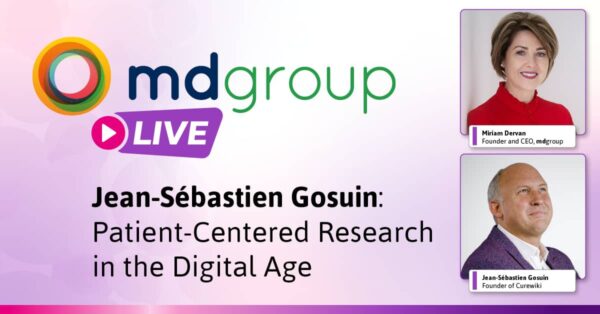
In this inspiring conversation, Miriam speaks with Jean-Sébastien Gosuin, Founder of Curewiki, about how digital innovation can help make clinical research more accessible and patient-centered. Drawing on his journey from sports marketing to health technology, Jean-Sébastien shares how his platform is helping patients discover clinical trial opportunities while giving sponsors and researchers valuable insights into the barriers that prevent participation.
The discussion explores how patient-first thinking, AI and real-world data can improve trial access, increase diversity and help more people take part in clinical research.