At mdgroup, clinical research is more than a profession — it’s personal. Why We Care is a series of real-life stories from our team, sharing how clinical trials have touched their own lives, families, and communities. These experiences drive our passion for delivering remarkable patient-centric solutions and reinforce why we’re dedicated to making clinical trials more accessible, compassionate, and human.
Every story is a reminder that behind every data point is a person, and behind every treatment breakthrough is hope.
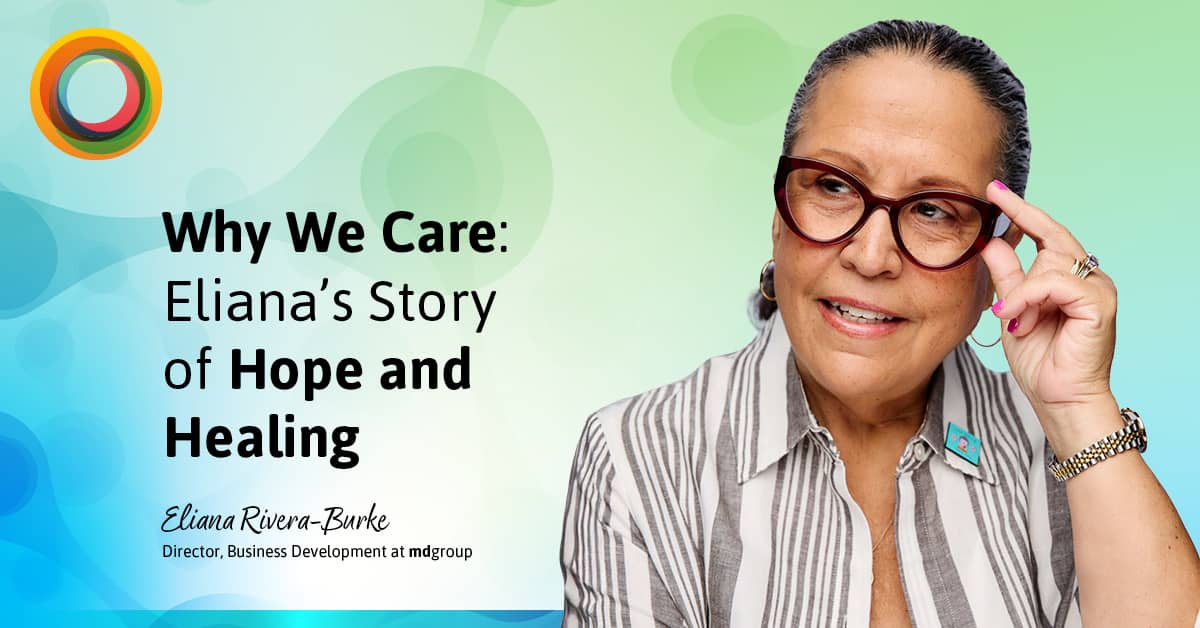
For Eliana Rivera-Burke, Director of Business Development at mdgroup, clinical research has always been her professional passion. But in 2020, it became deeply personal. After an unexpected health battle left her fighting daily with debilitating chronic hives, Eliana’s own clinical trial participation became a turning point—not just in her condition, but in her outlook on life. This is her story of struggle, hope, and how patient-centric clinical trials can change lives in ways that statistics and protocols never fully capture.
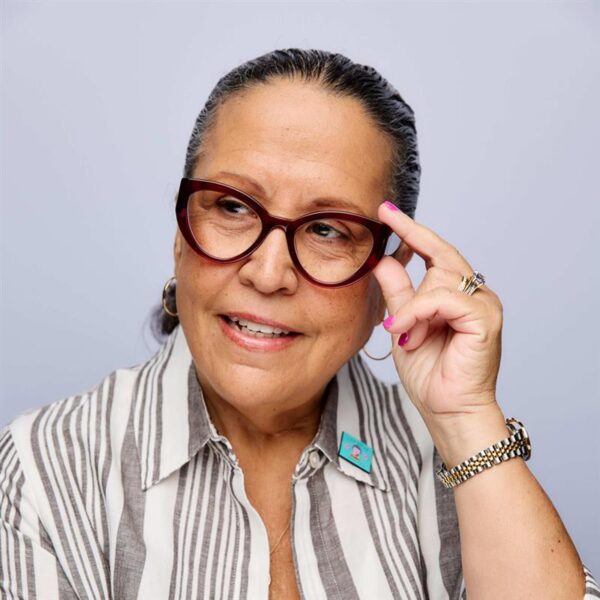
“I had always been active—hiking the trails outside my Colorado home, playing golf (badly), walking and swimming and juggling my job in clinical research with volunteering on behalf of my community. But all of that changed in the spring of 2020, to be exact, it was May when my skin began to erupt in angry, itchy welts that seemed to come from nowhere.
At first, I blamed stress or maybe a reaction to laundry detergent. But the hives—red, raised, and relentless—kept coming. Some days they were small patches; other days, they covered my entire back, my arms, my face and worse yet, my head. Antihistamines helped briefly but never completely. I would wake in the middle of the night, scratching until my skin bled, think crime scene on the mattress.
After months of confusion, dermatologist and allergist visits, and yes therapy (I thought I was going insane), I finally received a diagnosis: chronic spontaneous urticaria (CSU)—a condition where hives appear without a known trigger and persist for six weeks or longer. In my case, it has been years.
“It sounds benign when you say ‘hives,’” I told many, “but living with them every day feels like being at war with your own skin and often you are.” It’s a war that will discourage you and often make you feel helpless.
CSU stole more than my comfort. It took away my confidence. I stopped doing much of my activity, dreading the stares at my blotchy arms, legs or often my face. I suffered. Nothing seemed to help—not the prescription steroids, not the rotating cast of antihistamines, not even the elimination diets I tried out of desperation.
Then one day, my husband found a clinical trial for a new treatment. It was part of a global study, testing a drug that targeted one of the pathways believed to cause CSU symptoms. There were no guarantees, they warned—some patients saw improvement, others didn’t. But for me, who felt like I was drowning in my own body, it felt like a lifeline.
The clinical trial required regular oral medication, daily symptom logs, and frequent visits for blood work and monitoring. It was exhausting. I questioned whether it was worth it—until, several months in, something changed.
“I woke up one morning and realized… I wasn’t itching,” and I was beyond happy, I cried. “I hadn’t scratched in my sleep. My skin was just… normal.” And no blood on the bed….WHEW!
The hives didn’t disappear all at once, but they faded. They have never completely stopped, but I have relief, and the outbreaks are minimal. I have days when my skin is calm. I started sleeping again. My mind, once clouded by fatigue and frustration, began to clear. I returned to golf (I still am not great at it, but I try). I went back to swimming, and walking, I went back to life. We went on vacation with no fear of flare-ups. And if one came, I was ready.
The trial continues and the hope is simple that it gets approved, allowing so many more to be treated for this condition, which had no potential treatment until recently. Today, I volunteer as a patient advocate, sharing my journey with others newly diagnosed. “Being part of that trial gave me my life back”, I tell them. But more than that, it gave me a purpose to help others find hope when they feel like they’ve tried everything.
But the truth is, I’m still living with CSU. That part hasn’t changed. It’s a constant companion – sometimes quiet, sometimes loud, but always there. There are days when the hives are manageable and I can almost forget about them for a few hours, and then there are days when they roar back and remind me just how heavy this condition can feel.
Before the clinical trial, those dark days were the only days. My life felt like a cycle of itching, swelling, exhaustion, and frustration. I never knew when a flare would hit, and that unpredictability stole so much from me – my confidence, my comfort, my ability to plan for tomorrow without fear. It’s hard to explain to someone who hasn’t lived it what it feels like when your own body betrays you in such an unrelenting way.
The clinical trial changed that. It didn’t take CSU away completely, but it gave me something I hadn’t felt in a long time: hope. For the first time, I wasn’t just reacting to the symptoms—I was part of something bigger, something that was trying to get ahead of the disease. The trial gave me access to a treatment that brought relief I hadn’t thought possible, and with it came small but powerful victories: being able to fall asleep without scratching until dawn, going out without an extra layer of fear, looking in the mirror and seeing myself instead of my condition. Hives.
It also gave me something even more profound—the sense that I wasn’t alone in this fight. Every visit, every conversation with the trial team, reminded me that there are people who care, who are working tirelessly to find answers. They saw me not just as a patient, but as a person. That human connection is something I carry with me every single day. And why I do what I do at mdgroup.
I am still living with CSU, yes. But because of the clinical trial, I’m living with it differently. I’m living with resilience. I’m living with gratitude. I’m living with the knowledge that progress is being made and that my participation, in some small way, helped pave the way for others who are still searching for relief.
Some days are still tough—this journey isn’t over—but now I walk through those days with the memory of what’s possible, and with a hope I never thought I’d get back.”
Cures are out there.